Short-Form Video Platforms: Where to Post & How to Grow in 2026
Short-form video now accounts for 80% of mobile traffic. This guide explains how the major platforms work, why faceless content lowers production friction, and how to build a repeatable system for YouTube Shorts, TikTok & Reels.
FlowShorts Team

Short form video stopped being a side format a while ago. It is now a core distribution layer for attention, education, and digital commerce.
The scale makes that hard to ignore. The short video platform market was valued at $2.22 billion in 2025 and is projected to reach $2.5 billion in 2026, then $3.99 billion by 2030 according to The Business Research Company. The same report notes that 1.6 billion people have engaged with short form videos, and that short form is projected to account for 80% of mobile data traffic in North America.
For a creator, marketer, or founder, that changes the question. The issue is no longer whether a short form video platform matters. The issue is how to participate without turning your week into an endless cycle of scripting, editing, posting, and checking dashboards.
That is where strategy matters. Manual creation can work, especially early on. But if your goal is consistency across TikTok, YouTube Shorts, and Instagram Reels, you eventually hit the same wall. Time runs out first. Then ideas. Then consistency.
The better model is to understand how these platforms work, then build a system that can feed them reliably. Faceless video is one of the clearest examples. It removes the need to be on camera, lowers production friction, and makes automation realistic.
The Unstoppable Rise of Short Form Video
Short video now shapes how people research, compare, and remember. The format has moved from entertainment slot to daily decision tool. A person can discover a skincare brand on TikTok at breakfast, watch a product comparison on Reels at lunch, and save a how-to Short before bed.
That behavior change has real consequences for creators. Attention no longer gathers in a few large viewing sessions. It breaks into dozens of small windows across the day, and short form is built for those windows. If your content operation still depends on finding a quiet afternoon to film, edit, caption, and publish, you are using a workshop model in a factory market.
Why creators feel the pressure
Short form changed the unit of production. The old model centered on a single polished asset. The newer model rewards a stream of clear, useful clips that can be tested, revised, and reposted in different angles.
A good comparison is retail. Long form works like a flagship store. Short form works like shelf space in a busy supermarket. You do not win because one display looked beautiful once. You win because your product keeps showing up where people already browse.
For working creators, that usually means three practical demands:
- More publishing opportunities: One strong idea can become several clips with different hooks, edits, or captions.
- Faster feedback cycles: You learn from response patterns quickly, which shortens the distance between idea and improvement.
- Lower production friction: Systems that remove filming, retakes, and manual editing have a clear advantage.
This is one reason faceless video has grown beyond a niche tactic. It turns content creation from a performance task into a repeatable production process. Instead of waiting for camera energy, lighting, and open calendar space to align, you can build around scripts, voiceover, visuals, templates, and automation.
The shift is structural
Platforms changed because audience habits changed first. Brands followed. Tools followed. Creator expectations followed.
You can see that shift in the surrounding tool stack. A few years ago, editing was the bottleneck. Now the bottleneck is throughput. Creators need a way to turn one idea into multiple publishable assets, adapt them for different platforms, and keep metadata, captions, and performance notes organized. Even small tasks add up. If you need to transcribe a TikTok video before repurposing it, that is part of the production system now, not a side chore.
The business implication is straightforward. Consistency used to be a discipline problem. For many teams and solo creators, it is now a systems problem.
A creator who relies on manual hustle can still get results. A creator with a hands-free workflow can test more ideas, publish more often, and keep going without burning out. That gap widens over time.
Decoding the Modern Short Form Video Platform
A useful way to think about a short form video platform is this: it is a perpetual content engine.
You upload one clip. The platform packages it, tests it with small groups, watches how people react, and decides whether to widen distribution. Then it repeats that process all day, with millions of videos competing for another turn in the feed.
That engine has three visible parts and one invisible one.

The feed is the product
Many believe the video is the product. On TikTok, Reels, and Shorts, the feed is the product.
The feed is built to reduce friction almost to zero. One video fills the screen. One swipe gets you the next. That design matters because it keeps decisions tiny. You are not choosing from a grid of thumbnails and making a big commitment. You are making a micro-decision every few seconds.
Research cited in a thesis from the University of South Carolina describes how algorithmic recommendation systems use infinite single-video feeds and vertical swipe navigation to induce a flow state, increasing average session times by 40% to 60% compared to long-form content. The same source notes that these systems boost distribution velocity 5x to 10x for content with high completion rates and interaction velocity in this study.
What the algorithm looks for
Creators often talk about “beating the algorithm” as if it were a hidden code. In practice, the system is mostly watching behavior.
Three signals matter a lot:
- Completion rate: Did people watch the whole clip?
- Interaction velocity: Did likes, comments, saves, or shares come quickly?
- Retention early on: Did viewers stay past the opening seconds?
Consider it a movie trailer test. If people leave after the first line, distribution slows. If they stay, react, and rewatch, the platform gets evidence that the clip deserves more reach.
This is why hooks matter so much. You are not trying to sound clever. You are trying to earn the next few seconds.
The creator tools lower the barrier
The second part of the engine is the creation layer. Short form apps make production easier with built-in editing, captions, music, effects, and templates. That is one reason the format expanded so quickly. The platform does not ask you to be a trained editor. It asks you to package an idea clearly and fast.
A practical habit here is transcription. If you repurpose interviews, voice notes, webinars, or talking-head clips into short form, it helps to transcribe a TikTok video first so you can pull sharper hooks, cleaner captions, and more scannable scripts.
The interface shapes behavior
The third part is psychological, but very concrete. The interface makes the next action obvious and nearly effortless. Swipe. Like. Save. Share. Repeat.
That does two things at once. It helps viewers consume more. It also gives platforms more feedback, faster. Every tiny interaction becomes a ranking signal.
Practical rule: On a short form video platform, simple content with strong pacing often beats complicated content with weak packaging.
Once you see the platform as a recommendation engine first and a video host second, a lot of confusing advice starts to make sense. Your job is not only to create videos. Your job is to create videos the engine can test, understand, and distribute.
The Complete Content Workflow From Idea to Analytics
The manual workflow for short form looks simple from the outside. In practice, it is a chain of small jobs. If one link is weak, the whole system slows down.

Step one is idea selection
Good short form starts before recording. The question is not “What can I say?” It is “What can I say fast, clearly, and in a way someone would watch to the end?”
Useful ideas usually fall into a few buckets:
- A sharp answer: one question, one takeaway
- A quick lesson: one concept broken into a few beats
- A strong opinion: one stance with a clear reason
- A visual transformation: before and after, mistake and fix, myth and truth
If you are teaching finance, for example, “three budgeting tips” is broad. “Why your budget keeps failing after payday” gives the viewer a reason to stay.
Step two is scripting for speed
Short videos do not need formal scripts, but they do need structure.
Create Faceless Videos on Autopilot
FlowShorts generates and posts AI videos to YouTube, TikTok & Instagram while you sleep.
Try FlowShorts Free →A simple manual script often has:
- Hook
- One core idea
- A payoff
- A next step
The common mistake is trying to fit too much into one clip. A short form video platform rewards compression. Each video should carry one burden, not five.
Step three is production and editing
Filming is one task. Editing is another. Formatting for mobile is another. Captions, music, pacing, and export are additional layers. Many creators underestimate the work involved here.
A polished short often includes:
- Vertical framing: so the video fills the phone screen naturally
- On-screen text: for clarity and silent viewing
- Tight cuts: to keep momentum
- Captions: to improve accessibility and scannability
Behind the scenes, platforms process your upload heavily. Short form platforms rely on FFmpeg for transcoding and compression, which helps convert videos into formats that work across devices while reducing buffering. Their back ends often use Node.js to manage millions of simultaneous API requests, serving over 616,000 years of daily content globally, according to this technical overview.
That technical layer matters for creators in a practical way. Export settings, aspect ratio, and file quality affect how your video survives the upload pipeline.
Tip: Edit for the phone first. If a caption is hard to read on a small screen, the platform may stream it perfectly and the viewer may still skip it.
Step four is platform-by-platform distribution
Manual posting becomes messy faster than many anticipate.
TikTok, Reels, and Shorts may all support short vertical video, but they still differ in metadata, captions, cover choices, audience expectations, and posting flow. If you are posting to each platform separately, you are doing repetitive work that adds almost no creative value.
That repetition includes:
- Uploading versions for each platform
- Adjusting captions and hashtags
- Checking formatting issues
- Scheduling or posting manually
- Watching separate dashboards afterward
Step five is analytics and iteration
After publishing, most creators look at views first. That is understandable, but not enough.
Better questions include:
- Did viewers stay through the opening?
- Which topics got saved or shared?
- Which hooks produced comments?
- Which video structure kept people watching?
A strong manual workflow turns analytics into the next batch of content. If clips about “mistakes” outperform clips about “tips,” that is a strategic signal. If one niche consistently holds attention better, that signal matters more than whether one video briefly spiked.
Here is the hard part. Every one of these steps takes time. Manual creation can teach you the craft, and it should. But it also reveals why so many creators eventually look for systems that can handle scripting, editing, scheduling, and posting with less hands-on work.
Matching Your Goals to the Right Platform Audience
Platform choice is usually framed as a popularity contest. That is the wrong way to think about it.
The better question is: What do you want the content to do? Reach, trust, clicks, product education, and authority are not identical goals. The same short form video platform can serve different purposes depending on how you use it.
Consumer behavior gives a few useful anchors. 73% of consumers favor videos between 30 seconds and 2 minutes for learning about products, U.S. adults spend an average of 58.4 hours monthly on TikTok, short-form videos under 1 minute average a 50% engagement rate, and 21% of marketers report that short-form video delivers the highest ROI, according to Yaguara.
Start with the business goal
If your goal is broad awareness, you want content that travels well beyond your current followers.
If your goal is trust, you need clearer explanations, repeated themes, and a recognizable point of view.
If your goal is sales support, your clips should reduce hesitation. That usually means showing use cases, objections, comparisons, or common mistakes.
Platform Audience Snapshot for 2026
| Platform | Primary Age Demographic | Key Content Strengths | Best For... |
|---|---|---|---|
| TikTok | Broad consumer audience with strong culture around discovery | Fast trend adoption, native-feeling hooks, frequent testing of new angles | Brand awareness, fast feedback, product discovery |
| Instagram Reels | Consumer and brand-focused audience that often values presentation and shareability | Visual polish, lifestyle framing, educational clips with strong design | DTC brands, creators building aesthetic trust, shareable education |
| YouTube Shorts | Audience that often overlaps with search and longer educational viewing habits | Discoverability tied to topics, strong fit for explainers and clips that lead to deeper content | Thought leadership, educational niches, top-of-funnel audience building |
This is a strategic lens, not a rigid rulebook. A finance creator can grow on all three. A product business can use all three. But the content angle often changes.
A simple way to map content to channel
Consider two examples.
A skincare brand may use Reels to present polished routines, TikTok to answer objections in a more direct tone, and Shorts to publish concise educational explainers that support search-driven discovery later.
A B2B consultant may struggle on Reels with generic talking-head advice, but do better on Shorts with fast whiteboard explainers and on TikTok with blunt myth-busting clips.
For a deeper look at how to adapt the same core asset across channels, this guide to content distribution strategies is a useful framework.
Takeaway: Do not ask which platform is best. Ask which platform fits the job you need the content to do.
That one shift prevents a lot of wasted effort. Instead of reposting the same clip everywhere and hoping, you can shape the message to match the audience’s context.
Shifting from Manual Creation to Automated Systems
Manual creation has a romance problem. People admire the grind long after the grind stops being useful.
The hustle phase teaches you important things. You learn hooks, pacing, niches, and what your audience ignores. But once you know those basics, more manual work does not always mean better results. It often means slower output, inconsistent posting, and creative fatigue.

Why manual effort breaks at scale
The problem is not only editing time. It is decision fatigue.
Every manual workflow asks you to repeatedly decide:
- what topic to cover,
- what angle to choose,
- what footage to use,
- what voiceover to record,
- when to post,
- where to distribute,
- what to test next.
That works for a few videos. It gets shaky when you are trying to maintain daily output across multiple channels.
Automation changes the unit of work
When creators move to systems, they stop treating each video as a standalone project. They start treating content like an operating process.
Create Faceless Videos on Autopilot
FlowShorts generates and posts AI videos to YouTube, TikTok & Instagram while you sleep.
Try FlowShorts Free →That means:
- Topic selection can follow repeatable niche criteria
- Scripting can be templated around proven structures
- Visual assembly can use reusable formats
- Distribution can happen from one workflow instead of three separate apps
A November 2025 study cited in a ScribeHow page reports that YouTube Shorts leads usage at 56%, followed by TikTok at 50% and Instagram Reels at 41%, while also noting that many creators struggle with data-driven niche gap identification across platforms in this source.
That last point is more important than it sounds. Most creators do not fail because video is impossible. They fail because they keep publishing into crowded, obvious topics without seeing where demand is under-served.
Why faceless content fits automation so well
Faceless content removes one of the biggest bottlenecks in short form. You do not need makeup, lighting, camera confidence, retakes, or your own face in every post.
That makes it easier to systematize:
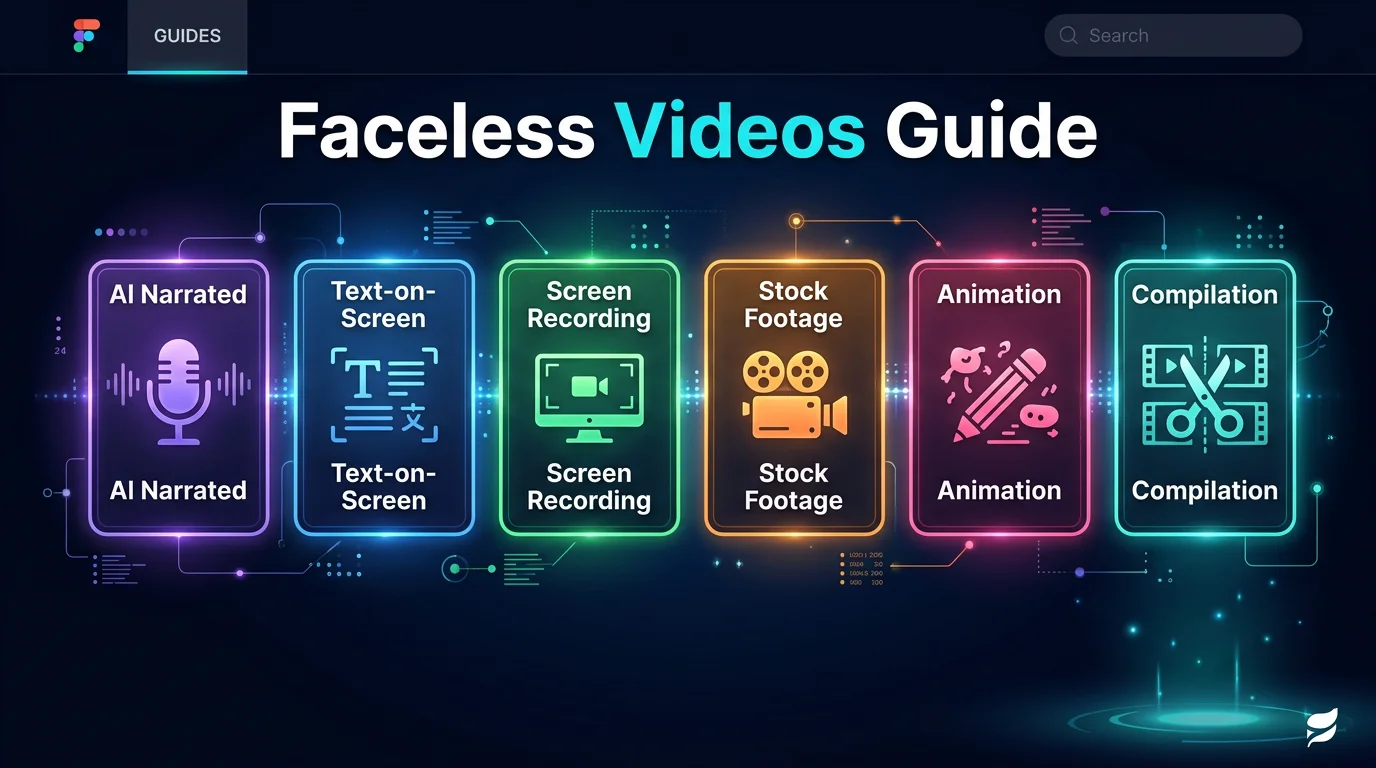
- educational explainers
- motivation clips
- finance summaries
- history breakdowns
- science facts
- luxury and lifestyle curation
This is the category where tools like automatic content creation become practical, not theoretical. The goal is not to eliminate judgment. The goal is to remove repetitive production work so strategy gets more attention than editing logistics.
Practical shift: Manual creation asks, “Can I make another video today?” Automated systems ask, “Can this channel keep publishing even when I am not actively producing?”
That is a different business model. It treats the short form video platform as an ongoing distribution engine and your content library as an asset that compounds through consistency.
How to Launch Your Hands-Free Content Channel
A hands-free channel works best when the setup is simple and the operating rules are clear. If the system still needs constant babysitting, you have only replaced one kind of manual labor with another.

Step one is connecting distribution once
The biggest time saver is centralizing where content gets published. Instead of logging into each platform separately, connect your channels once through secure platform-approved access such as OAuth, then let the system handle publishing from there.
The primary gain from this is not one less click. It is fewer broken routines. The more manual handoffs in your workflow, the easier it is to skip a posting window.
Step two is choosing a niche that can repeat
Hands-free content does not mean random content. It means controlled repetition around a topic that can support many clips over time.
Good faceless niches tend to have:
- clear audience intent,
- many subtopics,
- repeatable formats,
- strong visual or voiceover potential.
Finance, science, history, motivation, and luxury work well because they can be broken into small, focused clips without needing a personality-driven performance every time.
Step three is defining output, not individual videos
At this stage, many people get stuck, thinking in terms of a single video idea. A better approach is to define the publishing system.
Set:
- a posting cadence,
- a topic range,
- a preferred tone,
- platform targets,
- and quality checks for scripts, captions, and visuals.
After that, the content engine can work within boundaries you chose.
What the AI should handle
For automation to be useful, it needs to absorb most of the repetitive production chain.
That usually includes:
- Script generation around a chosen niche or angle
- Visual assembly using stock footage, graphics, or motion elements
- Voiceover creation for a clear spoken track
- Caption syncing so the clip is easy to follow without sound
- Scheduling and publishing across multiple channels
One example is FlowShorts, which is designed for faceless short-form video production and auto-posting to YouTube Shorts, TikTok, and Instagram Reels after a one-time setup. If you are comparing options, this roundup of the best AI video generators helps clarify which tools focus on editing, which focus on generation, and which handle end-to-end publishing.
What still needs your judgment
Hands-free does not mean brain-free. You still need to review what the channel is about and whether the output reflects the brand or niche correctly.
Human input is still valuable for:
- refining the niche
- rejecting weak angles
- setting boundaries for tone
- checking that claims are accurate
- watching which themes deserve more volume
The point is not to remove the creator. It is to move the creator up one level, from editor and uploader to strategist and operator.
Measuring Long-Term Growth and Monetization
Once your channel is running, the temptation is to chase the single breakout hit. That is usually the wrong scoreboard.
A healthier way to judge a short form operation is to look for compounding signals. Are videos publishing consistently? Is the baseline performance becoming more stable? Are certain themes repeatedly earning attention? Is the audience moving from casual views toward trust and action?
Metrics that matter more than vanity spikes
A useful review habit includes a few questions.
- Consistency: Is the channel maintaining output without long gaps?
- Retention patterns: Which intros keep viewers watching longer?
- Topic durability: Which subjects perform repeatedly, not just once?
- Audience movement: Are viewers returning, following, or seeking more of the same topic?
That tells you whether the system is learning. One viral clip can be luck. Repeated performance around the same angle is strategy.
Monetization follows reliability
Short form monetization usually opens after consistency creates enough surface area for opportunities to appear.
Those opportunities can include:
- platform revenue programs,
- affiliate offers tied to niche topics,
- lead generation for services,
- brand partnerships,
- product sales supported by ongoing exposure.
If you are exploring the sponsorship side, this guide on how to get paid for social media posts is a practical overview of the ways creators package their audience for paid work.
Important distinction: Monetization works better when you treat the channel like an asset, not a lottery ticket.
That means reviewing patterns over time, not obsessing over one upload cycle. A faceless channel built on repeatable topics can become useful well before it becomes famous. It can educate, support search visibility, feed other funnels, and build topic authority while the audience grows.
The strongest channels rarely look dramatic day to day. They look steady. Then, after enough steady output, the results stop looking small.
Answering Your Top Short Form Video Questions
Is a short form video platform only useful for entertainment?
No. Entertainment performs well, but short form also works for education, product explanation, commentary, and niche expertise. The key is compression. One video should carry one useful idea clearly.
Does faceless content feel less trustworthy?
Not necessarily. Trust comes from clarity, usefulness, and consistency. A faceless finance clip with accurate captions, clean visuals, and a strong explanation can feel more credible than a low-effort talking-head video.
Do I need to post on every major platform?
No. Start where your goal and audience align best. Expand when your workflow can support consistent publishing without quality slipping.
Is automation the same as low quality?
It can be, if the system is careless. Good automation is structured. It uses defined niches, repeatable formats, review steps, and platform-aware publishing. Bad automation just produces volume with no editorial judgment.
How often should I review an automated channel?
Often enough to catch pattern shifts, but not so often that you micromanage every upload. Review themes, hooks, and retention patterns in batches. The goal is to improve the system, not to hover over each post.
What is the biggest mistake creators make?
They confuse effort with effective advantage. Spending more hours does not automatically create a better channel. A clear niche, reliable posting system, and repeatable format usually matter more than heroic manual effort.
If you want a simpler way to run faceless short-form channels, FlowShorts handles scripting, visuals, voiceovers, captions, and auto-posting for YouTube Shorts, TikTok, and Instagram Reels after a one-time setup. It fits creators and teams who want a hands-free system instead of another editing workload.