How Does YouTube Count Views A Complete Guide

Ever wonder how does YouTube count views? This guide explains the 30-second rule, Shorts views, and the validation process that makes a view legitimate.

F

FlowShorts Team

21 min read5 views
How Does YouTube Count Views A Complete Guide

Ever wondered what it really takes for YouTube to count a view? It’s not as simple as someone just clicking on your video. At its core, a view is a signal of genuine human interest, and for standard videos, that signal is measured by the 30-second rule.

This rule is YouTube's bedrock for measuring engagement. Think of it as a gatekeeper: it ensures that the view count reflects real people who were actually invested enough to stick around, not just those who clicked by accident and bounced away.

What Actually Qualifies As A View On YouTube

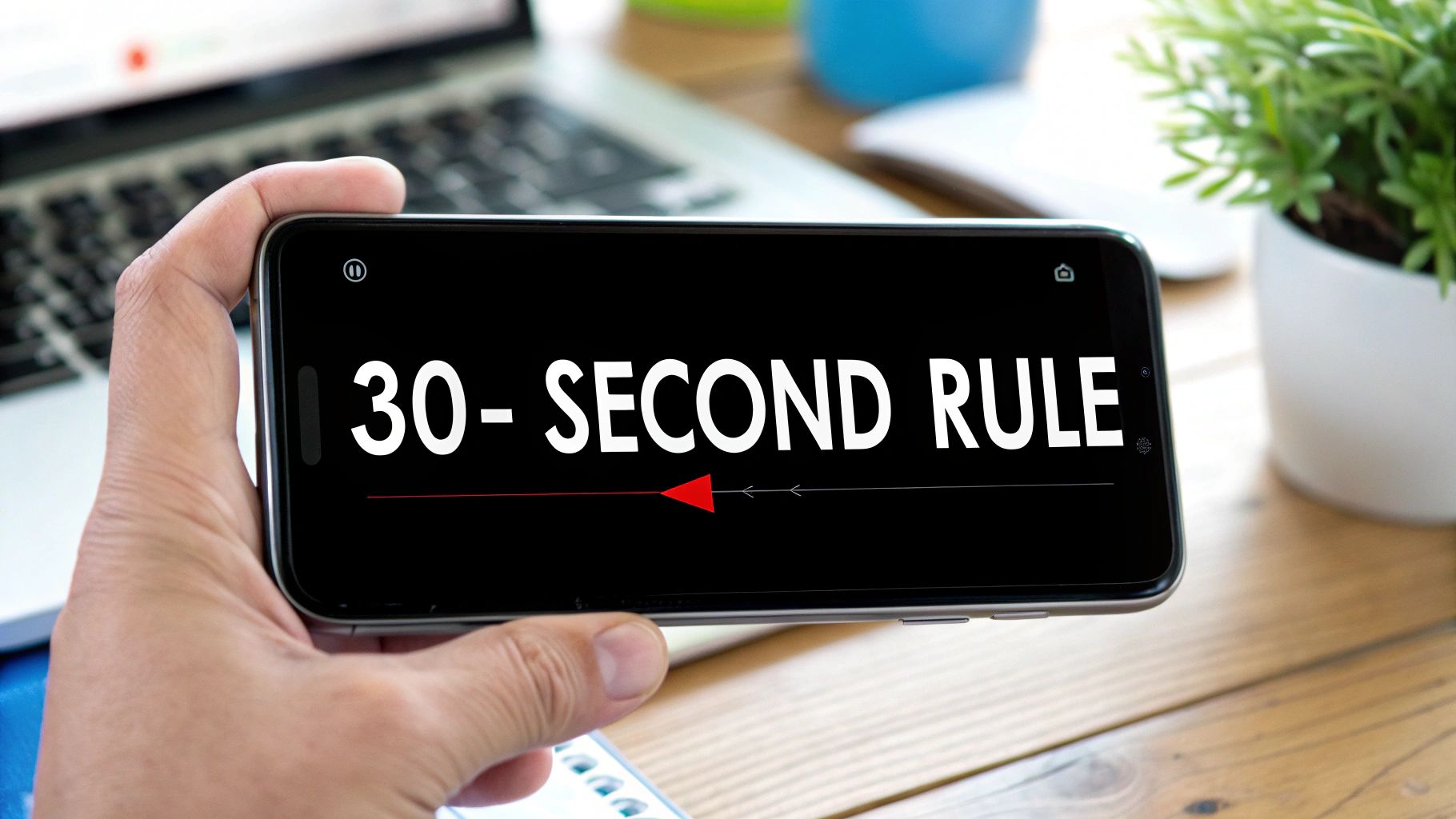
Hand holding a smartphone displaying '30-SECOND RULE' on a video player, with a laptop and plant in the background.

The 30-second rule is YouTube's quality control for attention. If someone watches for five seconds and leaves, their playback doesn't get added to the public tally because they didn't show real interest. But if they watch for 30 seconds or more, they've sent a clear signal to the platform: "This content was worth my time."

This distinction is crucial. It separates intentional viewership from fleeting impressions, which is why creators and advertisers can put a certain amount of trust in the view count metric.

The Two Core Pillars Of A Counted View

For any playback to officially become a "view," it needs to pass two fundamental tests. These are the non-negotiables that help YouTube's system tell a real person from a bot.

Here’s what the algorithm is looking for:

  • Viewer-Initiated Playback: The viewer has to intentionally press play. Views from autoplaying videos on other websites might not count unless YouTube can confirm a clear user intent to watch.
  • Minimum Watch Duration: For standard long-form videos, the viewer has to watch for at least 30 seconds.

What about videos shorter than 30 seconds? In those cases, a view is counted only if someone watches almost the entire thing. This clever little nuance stops people from gaming the system with ultra-short, spammy content.

Key Takeaway: YouTube isn't just counting clicks; it's measuring genuine interest. The 30-second benchmark is a deliberate choice designed to confirm a viewer is actively engaged, not just passing through.

To make this crystal clear, here’s a quick summary of what it takes to earn a legitimate view on YouTube.

YouTube View Criteria At A Glance

Criteria What It Means Why It Matters
Intentional Play A user must deliberately click the play button to start the video. This filters out passive or accidental plays (like autoplay on external sites) to ensure the viewer chose to watch.
30-Second Minimum The viewer must watch for at least 30 seconds of the video's duration. This is the benchmark for proving genuine engagement and separates real interest from fleeting curiosity.
Human Viewer The playback must come from a legitimate user, not a bot or a script. Protects the integrity of view counts and prevents artificial inflation of a video's popularity.

Think of these three criteria as the essential ingredients. If even one is missing, the playback likely won't make it into your official view count.

Why This Matters For Creators

If you're serious about growing your channel, understanding this is non-negotiable. It forces you to shift your focus from chasing clicks to creating content that grabs and holds attention from the very beginning. Your intro, your hook, even the pacing of the first minute—it all has to work together to get viewers past that 30-second mark.

When planning your next video, remember that every second counts. If you’re trying to grow your presence, you might want to find out how to get clips from YouTube videos to promote your best moments elsewhere.

Ultimately, YouTube's system is built to reward quality. A video with 1,000 highly engaged views is far more valuable in the eyes of the algorithm than one with 10,000 views from people who clicked away immediately. And this is just for standard videos—the rules change for Shorts and live streams, which we’ll get into next.

The YouTube View Count: A Quick History Lesson

To really get a handle on how YouTube counts views now, you have to look back at how it all started. In the early days, things were… well, a bit of a mess. The platform’s view counter was like the Wild West. If a video loaded, it counted as a view. Simple as that.

This simplicity created a huge problem. People quickly figured out how to game the system using automated scripts and click farms—basically, operations that pay people to click on links all day. This meant that a video with millions of views might not have been popular at all. It just had a clever (and shady) person behind it. This, of course, eroded trust for everyone involved, from creators to advertisers.

The 30-Second Rule That Changed Everything

The game completely changed in 2012. YouTube knew it had to do something to make the view count credible again. So, they introduced a new standard that’s still the foundation of the system today: the 30-second rule.

From that point on, a view would only be counted if someone watched a video for at least 30 seconds. This was a massive shift. It moved the goal from just getting a click to actually holding someone's attention. Suddenly, creators had to earn their views by making content that was compelling enough to keep people watching past that crucial half-minute mark. This single tweak was designed to separate real human interest from bots and fake plays.

On YouTube, a view isn't just a number. It's proof of engagement. The platform is built to reward content that can not only grab someone's attention but hold it long enough to matter.

This new, stricter system gave real weight to cultural milestones. Think about Psy's "Gangnam Style," which exploded in 2012 and became the first video to hit one billion views that December. Thanks to the 30-second rule, we knew that number was a legitimate measure of its global phenomenon, not just a bunch of empty clicks. You can dive deeper into the platform's biggest hits with this historical overview of YouTube's most-watched videos on Wikipedia.

Why Does This History Matter to You?

Understanding this backstory is crucial for any creator trying to grow on YouTube today. The entire algorithm is built on this principle of valuing genuine watch time over shallow interactions.

Here’s why it’s so important to keep in mind:

  • It Forces Quality: The system is designed to reward good content. You have to focus on hooking your viewer from the very first second.
  • It Builds Trust: Advertisers and brands can look at your view count and have confidence that it reflects a real, engaged audience.
  • It Shapes Your Strategy: Knowing that sustained attention is the currency of YouTube helps you structure your videos to keep people watching.

This evolution is exactly why YouTube has such a rigorous view-validation process today. It’s a system born out of a need to protect the platform's integrity and reward creators who are truly connecting with people. Every view is checked and double-checked to make sure the numbers are as real as possible.

Unpacking YouTube's View Validation Process

So, a viewer clicks play on your video. That's one view, right? Not so fast.

That click is just the beginning of a journey. It doesn't instantly get tallied on the public counter. Instead, every single playback is fed into a sophisticated verification system. Think of it as YouTube's own digital bouncer, working behind the scenes to decide who gets in and who gets tossed out.

The whole point is to make sure the numbers you see reflect real human eyeballs, not bots, scripts, or accidental clicks. This is where the platform’s advanced algorithms get to work.

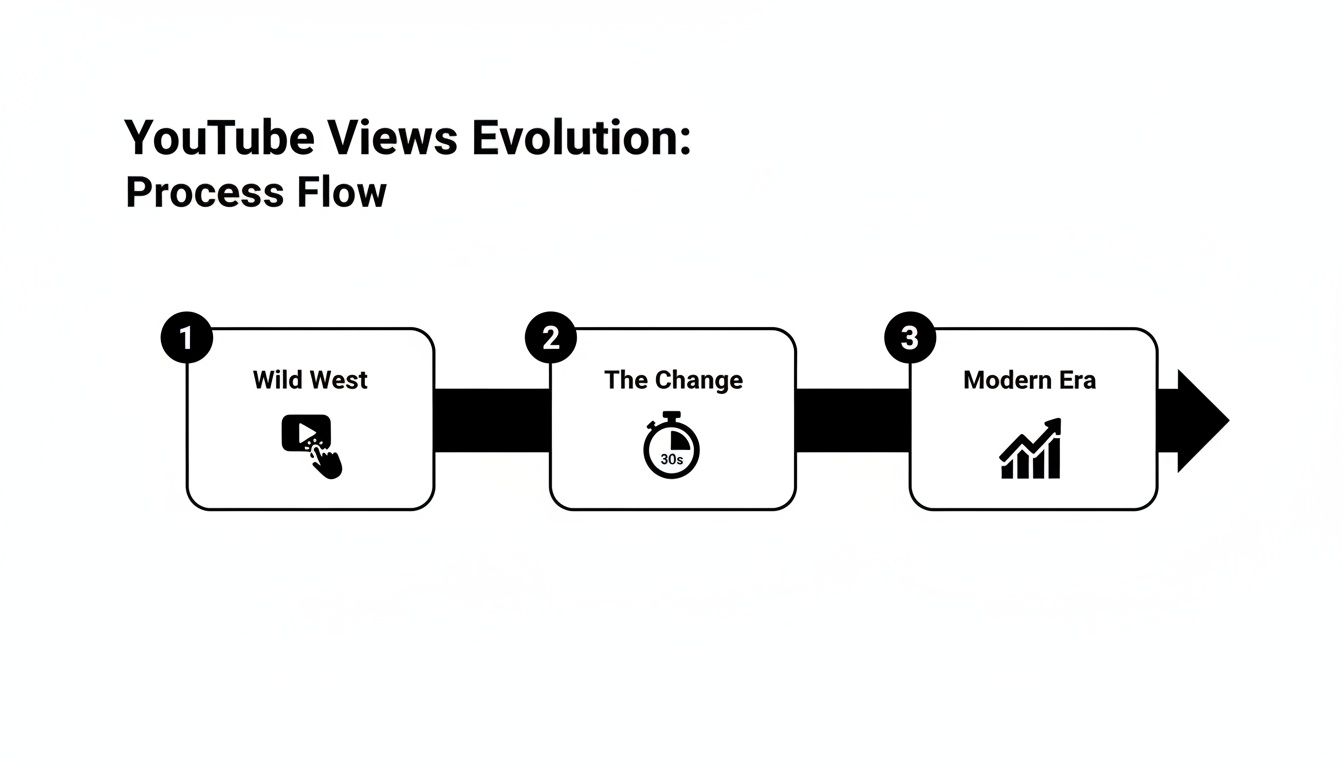
This infographic shows just how much the philosophy behind view counting has evolved over the years, moving from simple clicks to a much smarter, engagement-focused model.

Process flow illustrating YouTube view count evolution: Wild West, 30s change, and Modern Era.

As you can see, we've come a long way from the "wild west" of view counting. Today's system is all about meaningful interaction, which demands a seriously robust validation process.

The Algorithm's Role

At the heart of it all is a machine learning algorithm that sifts through a mountain of data points for every single playback. Its job is to spot the patterns and oddities that separate a genuine fan from a mindless bot.

It’s an incredibly detailed process that looks at much more than just the 30-second rule. The algorithm is checking out all kinds of signals to make its call.

Here’s a peek at what it’s looking for:

  • Playback Patterns: Does the viewing behavior look human? A real person might pause, skip ahead, or re-watch a section. A bot, on the other hand, is more likely to play videos in a robotic, predictable sequence.
  • IP Address and User History: Is the same IP address suddenly racking up thousands of views in a few minutes? That's a huge red flag. The system also considers a user's account history to see if it looks suspicious.
  • Device Information: The algorithm analyzes data from the device and browser to sniff out the tell-tale signs of automated software trying to game the system.

The Core Principle: YouTube's entire validation system is built on one powerful idea: authenticate every view. Its primary mission is to filter the raw playback data, leaving a final count that is a trustworthy measure of real engagement.

Understanding Filtered Views

Because of this intense scrutiny, a lot of raw playbacks never actually make it to the public view count. These are what we call filtered views—all the plays the algorithm flagged as low-quality or illegitimate.

This filtering is absolutely crucial for keeping the platform credible. YouTube's system is constantly working to combat fraud. After you upload a video, views only start rolling in after the algorithm confirms they are 'legitimate playbacks'. Based on creator reports and analytics, it's not unusual for 20-30% of raw plays to be filtered out before the final number goes live. For a broader look at platform trends, you can explore these streaming industry overviews on streamscharts.com.

This is exactly why you might see your view count freeze or even dip a little in the first few hours after you post a video. It’s not a bug. It's the validation system doing its job, auditing that initial wave of traffic and weeding out anything that doesn't pass the sniff test. The number that's left is a purified metric, giving you confidence that your views were earned from real people.

How Views Are Counted Across Different Formats

While the 30-second rule is the bedrock for a standard YouTube video, it doesn't quite work for everything on the platform. YouTube's ecosystem is diverse, and the way views are counted has to be just as flexible to match how people actually watch different kinds of content, from quick-hit Shorts to live events.

Figuring out these differences is crucial for any creator. The strategy you use for a 10-minute deep dive is completely different from what works for a 15-second viral clip. When you know how YouTube is keeping score, you can tailor your approach and aim for real, measurable growth.

A Quicker Count for YouTube Shorts

YouTube Shorts are a different beast altogether. They live in a world of endless scrolling and split-second decisions. Applying a 30-second rule here just wouldn't make sense.

So, YouTube adapted. A view on a Short is counted much, much faster. While they haven't published an official number, the consensus is that a deliberate watch of just a few seconds is all it takes. This could be someone pausing on your Short or letting it loop once. The system is built to reward the rapid-fire engagement that defines the Shorts feed. For you, this means the first few seconds of your Short have to do all the heavy lifting to hook a viewer and secure that view.

For Shorts, it's believed that a view is counted after about 5-10 seconds of watch time. This fast-tracked validation has been a huge factor in the format's incredible growth, which hit peaks of over 50 billion daily views in 2023. You can find more details on these Shorts viewing trends on YouTube’s official blog.

This low barrier to a view is exactly why Shorts can rack up numbers so quickly. It also makes content repurposing incredibly effective. For example, learning how to turn a YouTube video into a Facebook video lets you tap into this same short-form energy on other platforms.

View Counting Rules Across YouTube Formats

The way YouTube counts a view isn't a simple, one-size-fits-all rule. It's smartly adapted to fit how audiences engage with each type of content. The table below breaks down these key differences so you can see at a glance what counts where.

Video Format Minimum Watch Time for a View Key Considerations
Standard Long-Form 30 seconds This is the classic rule. The viewer must intentionally watch for at least 30 seconds.
YouTube Shorts A few seconds (not officially defined) Designed to capture rapid, scroll-based engagement. The first few seconds are critical.
Live Streams N/A (during broadcast) Focuses on concurrent viewers to measure real-time audience size.
Live Stream Replays 30 seconds Once the stream ends and is archived, it's treated like a standard video.
Embedded Videos 30 seconds Views count if initiated by a real person and watched for the minimum time.
Autoplay Videos Varies (often doesn't count) YouTube's system filters out passive or background plays to ensure views are from active viewers.

Ultimately, understanding these nuances helps you set realistic goals and build a content strategy that works for the specific formats you're using.

Views On Live Streams

Live streams operate on a totally different wavelength. Instead of counting up individual 30-second views while you're live, the number that matters is concurrent viewers. This metric shows you exactly how many people are tuned in at any given moment. It’s your real-time audience.

Once the broadcast is over, YouTube archives it as a regular video on your channel. From that point on, the replay starts gathering views just like any other video—based on the classic 30-second rule. This gives you two distinct ways to measure success:

  • During the stream: Concurrent viewers show you the live event's peak engagement.
  • After the stream: The replay's view count shows you the video's long-term appeal.

Embedded and Autoplay Videos

What about views that happen off of YouTube, like on a blog post or news article? Good news: views from embedded videos absolutely count. The catch is that they have to follow the same rules—the viewer has to intentionally press play and watch for the required amount of time.

Autoplay is where things get a little fuzzy. If your video autoplays silently in a background tab on someone's browser, that view probably won't be counted. YouTube is pretty good at sniffing out these passive playbacks, looking for signals that a real person is actively watching. No matter where your video is being seen, your goal should always be to earn attentive views from an engaged audience.

Let's Bust Some Common YouTube View Myths

It's tough enough trying to grow on YouTube without getting tangled up in bad advice. When it comes to how views are counted, there's a ton of misinformation out there. Believing these myths can send you down the wrong path, wasting your time on strategies that are, at best, useless and, at worst, harmful.

Let's clear the air and separate fact from fiction. Once you know what's real, you can focus on what actually works: making great videos that people genuinely want to watch.

Myth 1: You Can Just Replay a Video on Loop to Rack Up Views

This one's a classic. It seems like an easy hack, right? Just open your video, set it to loop, and walk away. Unfortunately, YouTube’s system is way ahead of you. It's built specifically to catch this kind of artificial activity.

The algorithm is constantly looking at playback patterns. When it sees dozens of views coming from the same IP address or user account in a short window, it flags that behavior as unnatural. After a handful of replays (think four or five), it'll simply stop counting.

The Reality: YouTube wants to measure real human interest, not how many times one person can hit the replay button. Looping a video is a dead giveaway that the engagement isn't organic. Real growth comes from new people discovering and watching your content, not from one fan (or yourself) trying to game the system.

Myth 2: Buying Views Is a Harmless Shortcut to Get Started

When you're starting out, the temptation for a quick fix can be strong. Services promising thousands of views for a few bucks sound like a dream. But this is probably the most dangerous myth a creator can fall for. Buying views is a direct violation of YouTube's fake engagement policy, and the platform takes it very seriously.

YouTube’s detection systems are incredibly good at spotting views from bots and click farms. When they catch you, the fallout can be disastrous for your channel.

  • Your views will vanish. The purchased views will almost certainly be identified and removed during an audit.
  • You could get a channel strike. This can restrict your ability to upload, livestream, and monetize your content.
  • Your channel could be terminated. For serious or repeat offenses, YouTube won't hesitate to delete your entire channel.

Even if you somehow avoid a penalty, you're still sabotaging yourself. Purchased views absolutely wreck your analytics, giving you worthless data. Your audience retention will be in the gutter, your click-through rates will be meaningless, and you'll have zero real insight into what actual viewers want to see. It’s a shortcut that leads to a dead end.

Myth 3: Views From Your Own Account Never Count

Lots of creators think watching their own videos is a complete waste of time because YouTube automatically ignores them. That’s not quite right. Your own views do count—at first.

YouTube expects you to watch your own video a few times right after you upload it. It's a natural thing to do—you want to check for any glitches, make sure the audio is right, and see how it looks on the platform. Those initial views are counted just like anyone else's.

But just like the looping myth, the system is designed to stop creators from endlessly re-watching their own content to inflate the numbers. After a few plays from your account, YouTube recognizes the pattern and stops adding them to the public count. So go ahead and check your work, but don't expect to build an audience by clicking on your own videos all day.

Actionable Strategies to Earn More Legitimate Views

A laptop screen showing video thumbnails, a notepad, and a pen on a wooden desk, with text 'EARN REAL VIEWS'.

Knowing the rules of the game is one thing, but playing to win is another. Now that you understand how YouTube counts views, you can use that knowledge to your advantage. This isn't about finding shady loopholes; it's about making content that genuinely connects with people—the very thing the algorithm is designed to find and reward.

The real goal isn't just getting clicks. It's about earning attention—the kind of engagement that sails past that crucial 30-second mark. Getting there requires a thoughtful approach, from the split-second impression your thumbnail makes to the very last line of your video.

Let's break down the practical steps you can take to earn more views that actually count.

Master the First Impression

Before anyone can watch your video for 30 seconds, they have to actually click on it. Think of your thumbnail and title as your digital storefront. In a sea of endless options, they have to be compelling enough to convince someone to come inside.

A great title sparks curiosity without feeling like cheap clickbait. A high-quality thumbnail visually screams what the video is all about. These two elements are a tag team responsible for your click-through rate (CTR)—the percentage of people who see your video and decide to watch. A higher CTR gives you more shots at earning those all-important counted views.

Key Insight: Your thumbnail and title make a promise. Your job is to deliver on that promise within the first 30 seconds of your video. That’s how a click becomes a counted view and, more importantly, a happy viewer.

Optimize for Discovery Beyond the Homepage

Sure, getting featured on the homepage is great, but search is where you build a lasting audience. For your videos to show up when people are looking for them, you have to give YouTube the right signals about your content. This is all about your metadata.

And no, that doesn't just mean stuffing a bunch of keywords into your description. It’s about creating clear context for both the algorithm and your potential viewers.

  • Write Helpful Descriptions: Use the first couple of lines to get straight to the point and explain the video's value. From there, you can expand on key topics, add timestamps to help people navigate, and link to other relevant resources.
  • Use Smart Tags: Mix broad and specific tags that accurately describe your video. Put yourself in your viewer's shoes: what would they type into the search bar to find content like yours?
  • Craft a Solid Script: A well-planned narrative is the backbone of viewer retention. If you're struggling to keep people hooked, learning how to write a good script for a YouTube video can be a total game-changer.

Design Content That Holds Attention

Getting the click is only half the battle; keeping the viewer is where the real work begins. Your video needs to be structured to hold momentum, especially through that critical first minute. This is where knowing the 30-second rule becomes a creative superpower.

Start with a strong hook that immediately grabs the viewer and confirms they're in the right place. Ditch the long, self-indulgent intro that just begs people to click away. Use good storytelling, dynamic editing, and clear visuals to make your content engaging and easy to digest. When you focus on keeping your audience watching, you naturally rack up more watch time and ensure more of those initial clicks turn into legitimate, counted views.

Common Questions About YouTube Views

Even when you think you've got a handle on how YouTube works, some things can still leave you scratching your head. Let's dig into a few of the most common questions creators have about their view counts and clear up the confusion.

Why Did My View Count Freeze?

It’s a classic moment of panic for a creator: you've just uploaded a video, it's taking off, and then... the view counter just stops. But surprisingly, this is actually a good sign.

When a video gets a sudden burst of attention, YouTube’s system intentionally pauses the public counter to do a quick quality check. It’s basically running an audit to make sure all that traffic is from real people, not bots or spammy replays. After a few hours, once everything is verified, the counter will jump up with all the legitimate views. So, don't worry—a frozen counter isn't a bug; it's YouTube making sure your numbers are accurate.

Do Views From My Website Count?

Absolutely. When you embed a video on your blog or another website, those views can definitely count towards your total. This is a fantastic way to get your content in front of people who might not be browsing YouTube directly.

There's a catch, though. The view has to meet the same rules as a view on YouTube.com. That means someone has to intentionally click play and watch for at least 30 seconds. An embedded video that just autoplays in the background probably won't be counted, because YouTube is looking for active, engaged viewers.

Key Insight: Watch Time is the total amount of time people spend watching your video. A view is just a single tally. The YouTube algorithm cares way more about high Watch Time than it does about a high view count because it proves your content is genuinely captivating.

What's the Difference Between Watch Time and Views?

It’s easy to mix these two up, but they tell very different stories about your video's performance.

A view is just a number—it confirms someone started watching. Watch Time, on the other hand, is the grand total of every single minute and second everyone has spent watching your video. It measures how long you held their attention.

For your channel's long-term health, Watch Time is the metric that truly matters. Think about it: a video with a million views but an average watch time of 10 seconds signals clickbait. But a video with high Watch Time tells the algorithm that people are hooked, making YouTube far more likely to recommend it to others.


Ready to scale your short-form content without spending hours editing? With FlowShorts, you can generate and auto-post engaging videos to Shorts, Reels, and TikTok daily. Let our AI handle the production so you can focus on growing your brand. Start automating your content with FlowShorts today!

Tags

#how does youtube count views#youtube view count#youtube analytics#youtube shorts views#legitimate views

Share this article

Ready to Create Your Own Viral Videos?

Start creating AI-powered short videos today with FlowShorts.

Get Started Free