How to grow youtube channel fast: AI and SEO for rapid growth

Discover how to grow youtube channel fast with AI tools and proven SEO strategies to boost Shorts, automate content, and monetize quickly.

F

FlowShorts Team

19 min read2 views
How to grow youtube channel fast: AI and SEO for rapid growth

If you want to grow a YouTube channel fast today, you need to flip the old script. The slow, painstaking process of creating one perfect long-form video at a time is no longer the quickest path to an audience. The real secret is a high-volume, vertical-first approach centered on YouTube Shorts.

By consistently pushing out Shorts, you're playing directly to an algorithm that rewards watch time and swipe-through rate, not your subscriber count. This gives brand-new channels a fighting chance to get discovered and blow up.

Adopt a Shorts-First Strategy for Explosive Growth

Forget spending weeks on a single video. The modern growth playbook is all about short, punchy, vertical content. A Shorts-first strategy means you build your entire content plan around this format, making it the engine that drives subscribers and builds momentum.

Think of each Short as a 15-60 second trailer for your channel. They're built for discovery. The algorithm serves them up to a massive audience on the Shorts Shelf—people who've never heard of you and likely wouldn't find your long-form videos otherwise.

Why This Approach Is So Effective

The Shorts algorithm is a different beast. It doesn't really care how many subscribers you have. It cares about performance. A channel with zero subscribers can genuinely go viral overnight if a Short hooks viewers and keeps them watching.

This isn't just theory; the numbers are staggering. We've seen channels that post Shorts consistently experience a +44% surge in growth over just six months. And the potential audience is mind-boggling—YouTube Shorts now pulls in over 200 billion views every single day across the globe.

YouTube Shorts growth metrics showing 44% YoY growth, over 200 billion daily views, and platform trend.

These metrics make it clear: going all-in on Shorts isn't a gamble. It's a proven, data-backed strategy for scaling your channel at a speed that was once impossible.

Shorts-First Growth vs Traditional Long-Form Strategy

To see just how different this approach is, let's compare it directly to the old-school method of focusing on long-form content from the start.

Growth Factor Shorts-First Strategy Traditional Long-Form Strategy
Discovery Speed Extremely fast; algorithm pushes content to non-subscribers immediately. Slow and steady; relies on SEO, browse features, and suggested videos over time.
Audience Reach Massive and broad; taps into the global Shorts shelf audience. Niche and targeted; primarily reaches viewers actively searching for the topic.
Content Volume High frequency (daily or multiple times a day) is encouraged. Low frequency (weekly or bi-weekly) is the norm due to high production effort.
Production Effort Low; can be filmed and edited on a smartphone in minutes. High; requires extensive scripting, filming, editing, and graphic design.
Feedback Loop Instant; you know within hours if a video format or topic is working. Delayed; can take weeks or months to gather meaningful performance data.
Subscriber Velocity Can generate thousands of subscribers from a single viral Short. Gradual, linear growth based on consistent value over a long period.

The table really highlights the core advantage: speed. Shorts offer a rapid feedback loop and an immediate pathway to a massive audience, which is a game-changer for new channels trying to gain a foothold.

Building Your Content System Around Shorts

Making this strategy work requires a mental shift. You're moving away from a "quality over quantity" mindset and into one that balances both. The goal is to post frequently enough to stay top-of-mind for the algorithm.

Here’s what that looks like in practice:

  • Post a Lot: Seriously. Aim for at least one Short per day, but don't be afraid to post more. Consistency is your best friend here.
  • Keep Production Simple: You don't need a RED camera. Your smartphone, some decent light, and a clear idea are more than enough to get started.
  • Experiment Constantly: The best part about a high-volume strategy is that you can test new ideas fast. Try different hooks, topics, and editing styles. You'll figure out what your audience loves in days, not months.

The big idea is to use Shorts as your main subscriber acquisition tool. They pull in new viewers and subscribers at an incredible rate, building an audience you can later introduce to your longer videos.

This completely flips the traditional model on its head. Instead of making a long-form video and praying it gets discovered, you use an army of Shorts to build your audience first. If you're new to the format, taking a few minutes to learn how to post YouTube Shorts correctly will ensure you’re optimizing every upload for maximum reach right from the start.

Master YouTube SEO to Get Discovered

If you make an incredible video but nobody sees it, does it even exist? Think of YouTube as more than just a video platform—it's the second-biggest search engine on the planet. Getting a handle on its algorithm is the key to getting your content in front of the millions of people searching for it every single day.

Let’s get practical. This isn't about just stuffing keywords everywhere. It's about learning the art of crafting titles, thumbnails, and descriptions that all work together to hook both human viewers and the YouTube algorithm. This is how you stop being just another video in the feed and start getting noticed.

A smartphone displaying a YouTube Short video on a desk, next to a plant, notebook, and computer.

Crafting Titles That Demand a Click

Your title is the most valuable piece of SEO real estate you own. It has to do three things at once: be searchable, be irresistible, and be honest about what's in the video. A killer title either promises a clear solution or sparks a ton of curiosity.

For example, instead of a bland title like "My Morning Routine," you could frame it as "The 5 AM Morning Routine That Changed My Life." The second one is specific, promises a tangible benefit, and naturally includes the search term "morning routine."

A few quick tips to get this right:

  • Front-load your keyword: Put your main topic right at the beginning. It tells the algorithm exactly what your video is about from the get-go.
  • Use numbers & power words: Titles with lists (e.g., "7 Mistakes To Avoid") or intriguing words (e.g., "Secret," "Instantly," "Warning") have a proven track record of boosting clicks.
  • Stay under 60 characters: This is crucial. It ensures your full title shows up on mobile and desktop without getting cut off.

Something like "How I Grew My YouTube Channel Fast Using Only AI" is worlds better than "YouTube Growth Tips." It uses a "how-to" format and dangles a specific, intriguing method in front of the viewer.

The Art of the Viral Thumbnail

Think of your thumbnail as your video's billboard. As a viewer scrolls, you have a split second to grab their eye and convince them your video is the one worth watching. When a great thumbnail and a great title work together, they're practically unstoppable.

Here’s how to think about it: the title makes the promise, and the thumbnail is the visual proof. They have to tell the same story. If your title is "Baking the Perfect Sourdough," the thumbnail better show a gorgeous, perfectly baked loaf of bread—not a sack of flour.

Your thumbnail is not a summary; it's an advertisement. Its only job is to get the click. Focus on high-contrast colors, expressive faces, and minimal, bold text that complements the title.

Best Practices for High-Performing Thumbnails:

  1. High-Contrast Colors: Use bold, bright colors like yellow, green, or blue. They pop against YouTube's red, white, and black interface.
  2. Expressive Faces: Our brains are hardwired to look at faces. A close-up showing a strong emotion—like shock, joy, or confusion—is incredibly effective.
  3. Minimal Text: Keep any text to 3-5 powerful words that add context or intrigue. Most importantly, make sure it’s big and bold enough to be read on a tiny phone screen.

Writing Descriptions and Tags That Feed the Algorithm

While they aren't as flashy as titles and thumbnails, your description and tags are what you use to feed the algorithm crucial information. This is your chance to add context and double down on your keywords.

Treat your description like a mini-blog post. The first two sentences are the most important because they often appear under your video in search results, so get your main keyword in there naturally. After that, go into more detail about the video, add relevant links, and use timestamps for longer content to help people find exactly what they're looking for.

When it comes to tags, just put yourself in a viewer's shoes. What words or phrases would they type into the search bar to find a video like yours? Use a healthy mix of broad terms ("baking tips") and very specific ones ("how to get an open crumb on sourdough").

While your own intuition is a great starting point, a little help never hurts. You can find excellent keywords by exploring a YouTube tags generator to see what's trending. Just remember, the goal is relevance, not just stuffing as many keywords as you can. Misleading tags will only hurt you in the long run.

Automate Your Content with Faceless AI Videos

Let's be honest. The number one thing that kills most ambitious YouTube growth plans isn't the algorithm or the competition. It's burnout.

Trying to consistently create high-quality content, especially multiple Shorts every single day, is a brutal grind. It’s the reason most creators quit. This is where you can get a serious, almost unfair, advantage.

Imagine having a content machine that does the heavy lifting for you—a system that never gets tired, never runs out of ideas, and works 24/7 to keep your channel pumping out fresh content. This isn't some far-off fantasy; it's what's possible right now with AI-powered faceless video automation.

Building Your Hands-Free Content Engine

The whole idea here is to pull yourself out of the most time-sucking parts of making a video. Faceless content means no messing with cameras, no setting up microphones or lights, and absolutely zero tedious editing sessions. Instead, you're using smart automation to run the entire production line.

Specialized platforms can take a simple idea or a keyword and spin it into a finished video in a matter of minutes. The process is actually pretty slick:

  • AI Scripting: The system generates a punchy script built for short-form video, making sure it has a strong hook and a clear point.
  • Finding Visuals: It then automatically pulls in relevant, high-quality stock footage and images that bring the script to life.
  • AI Voiceover & Captions: A surprisingly natural-sounding AI voice reads the script, and perfectly synced captions are burned right into the video.
  • Auto-Posting: The final Short gets published directly to your YouTube channel based on a schedule you control.

This is more than just a time-saver. It completely changes your role from being a hands-on creator to a high-level manager. Your job becomes strategic—you guide the machine, look at the analytics, and let the automation handle the day-to-day grind.

Where Faceless Content Really Shines

While you can make this strategy work for a lot of niches, it's an absolute game-changer in fields where the information is the real star of the show. Think about topics where viewers care more about the value they're getting than the person delivering it.

  • Finance and Motivation: Daily stock market insights, wealth-building tips, or powerful motivational quotes are perfect for this.
  • History and Science: Can you explain a complex historical event or a cool science fact in 60 seconds? The AI can source archival footage or scientific animations in a snap.
  • Luxury and Facts: Content that shows off luxury lifestyles or shares "did you know?" trivia can be cranked out at scale to attract a massive, general audience.

The common thread here is that the value is baked into the information itself. People subscribe for that daily hit of knowledge or inspiration, not for a personal connection with a creator on screen. This lets you maintain rock-solid brand consistency and quality while producing videos at a pace no human could ever match.

Automation transforms content creation from a time-based liability into a scalable asset. Instead of trading hours for videos, you're building a system that produces content for you, compounding your channel's growth even when you're not actively working.

Outproducing the Competition Without Burning Out

This is how you dominate the volume game. While other creators are spending hours scripting, filming, and editing a single Short, your automated system can knock out several.

You can easily stick to a schedule of 2-3 Shorts per day, every single day. You'll be feeding the algorithm the consistency it loves, which dramatically increases your chances of a video popping off and sparking that exponential growth we're all after.

This isn't about pumping out low-effort spam. It's about using technology to produce valuable, well-packaged information far more efficiently. You can see just how sophisticated these systems are by learning more about how an AI faceless video generator works. By embracing automation, you're not just learning how to grow a YouTube channel fast—you're building a sustainable, scalable media asset for the long haul.

Build a Posting Schedule That Actually Works

A laptop on a wooden desk displays "Automate Content" on its screen, alongside headphones and a mouse.

Consistency is the golden rule of YouTube, but that's only half the story. "Consistent" doesn't just mean posting a lot—it means posting smart. A well-designed schedule turns your uploads from random drops into calculated events that catch the algorithm's attention right when it matters most.

So many creators fall into the trap of just churning out content, thinking more is always better. That’s a fast track to burnout. The real goal is to get your videos in front of your audience the moment they’re online and ready to watch. That’s how you build momentum and signal to YouTube that your channel is a place where things are happening.

Finding Your Channel's Prime Time

Stop guessing when to post. You’re leaving a ton of views on the table by throwing content out there randomly. The good news is, YouTube literally tells you when your viewers are most active. You just have to know where to look.

Your own YouTube Analytics holds the key. Here’s how you can find this data and put it to work:

  • Head over to YouTube Studio.
  • Click on Analytics in the left menu.
  • Go to the Audience tab.
  • Look for the report called “When your viewers are on YouTube.”

You’ll see a chart with purple bars. The darkest bars show the exact days and times your audience is online in droves. Plan to schedule your videos about an hour before these peak times start. This gives YouTube a little time to process your video so it's ready to be pushed out just as your audience starts scrolling.

The Right Cadence for Shorts vs. Long-Form

You can't treat Shorts and long-form videos the same way when it comes to posting frequency. A Shorts-first strategy runs at a sprint, while long-form content is more of a marathon.

  • For Shorts: You should be aiming for 1-3 videos every single day. The Shorts algorithm loves high volume, and each post is another lottery ticket for a viral hit. Since they're quick to make, this pace is completely manageable, especially if you get into automation.
  • For Long-Form Videos: Stick to a schedule of 1-2 videos per week. These are your anchor content—the high-effort, high-value videos that your Shorts have been teasing and promoting all week.

This two-pronged approach uses the daily grind of Shorts to keep the channel active and pull in new subscribers, while the weekly long-form videos give them a reason to stick around and become real fans.

The Content Compounding Effect

Every Short you publish is more than just a one-off video; it's a small investment in your channel's future. When you maintain a steady, daily stream of content, you start to see what I call the "content compounding" effect. Each video builds on the last, creating a web that catches more and more viewers.

When you post content daily, you're constantly feeding the algorithm positive signals. One Short might not break the internet, but 30 Shorts in a month create a data-rich profile for your channel, telling YouTube exactly who your audience is and how to find more of them.

This sustained activity essentially trains the algorithm to work for you. It learns your niche inside and out, gets better at finding your ideal viewer, and starts recommending your content more widely. Over time, that consistent effort doesn't just add to your view count—it multiplies it.

Shorts Are Your Fast Track to Monetization

A desk setup featuring a calendar with 'SMART POSTING', a laptop, and a pen.

Sure, getting subscribers and views feels great. But for most of us, the real goal is turning that attention into a paycheck. For years, the only way to monetize on YouTube was a slow, uphill battle with long-form videos. Shorts have completely flipped that script, opening up a much faster, more direct path to making money on your channel.

This isn't just about qualifying for the YouTube Partner Program (YPP) sooner. It's about building a real, scalable income stream from the exact same high-volume vertical content you're using to grow.

The New Monetization Game

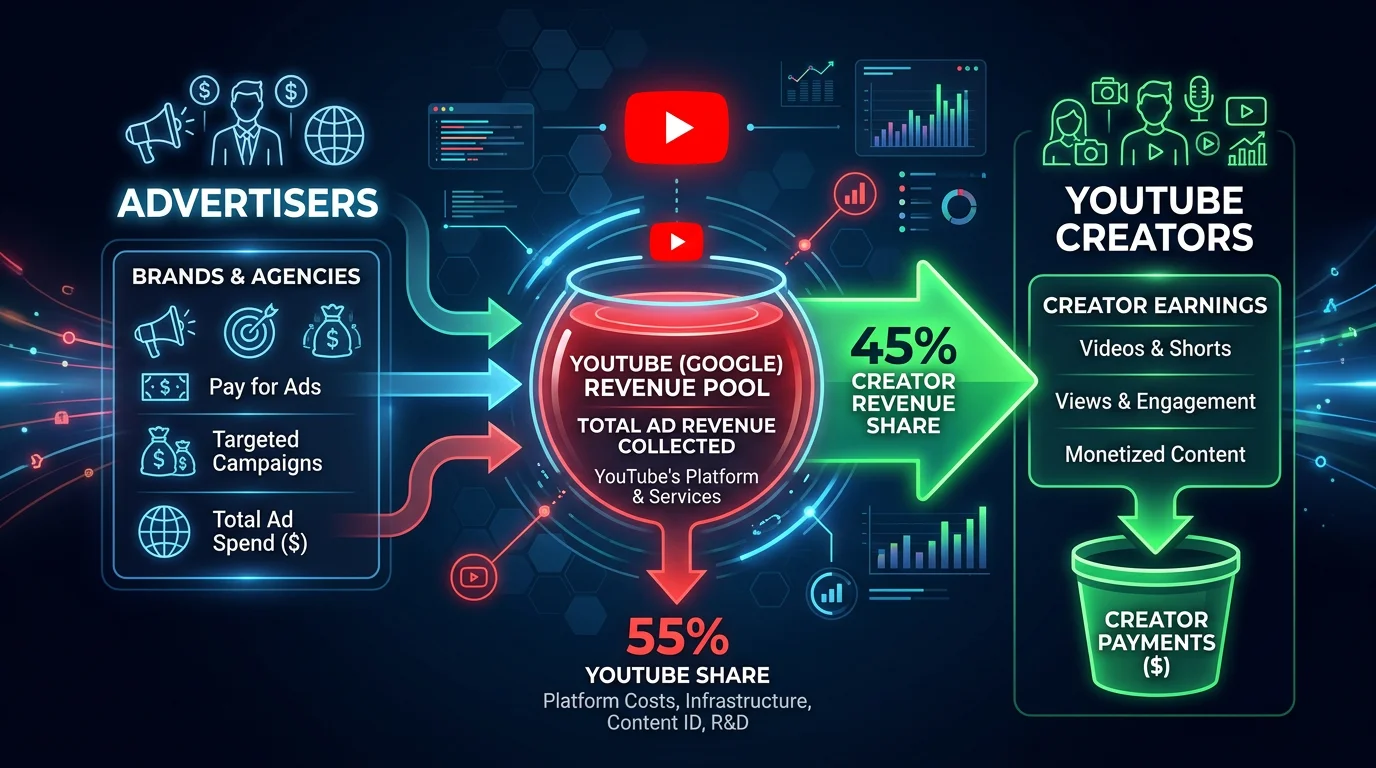
The old-school way of thinking was simple: Shorts were for growth, and long-form videos were for making money. That's just not true anymore. The introduction of the Shorts ad-revenue sharing model was a game-changer, letting creators earn directly from ads that appear between videos in the Shorts feed.

What this means is that every single Short you post, no matter how brief, is a potential revenue-generating asset. Your library of Shorts isn't just a collection of content; it's a portfolio of tiny money-makers.

Shorts monetization has leveled the playing field. You no longer need to produce long, elaborate videos to earn. High-frequency, high-engagement vertical content is now a direct path to a meaningful income stream on YouTube.

This creates a powerful feedback loop. As you focus on posting multiple Shorts a day to grow your channel, you're simultaneously laying the groundwork to earn money right from the start.

It's All About Volume, Not Just RPM

Let's talk numbers. It’s true that the RPM (Revenue Per Mille)—the amount you earn per 1,000 views—is typically lower for Shorts than for traditional long-form videos. A long video might have an RPM of several dollars, while a Short's RPM might be just a few cents. This fact alone scares a lot of creators away from Shorts monetization.

But that’s a rookie mistake. Focusing only on RPM misses the most important part of the equation: massive view volume.

Think about it this way. A long-form video with a $5 RPM that gets 10,000 views earns you $50. A single Short with a $0.05 RPM that goes viral and hits 2,000,000 views earns you $100. The math speaks for itself. The sheer scale of the Shorts audience easily makes up for the lower per-view rate.

Why Monetization Parity Changes Everything

That gap between Shorts and long-form earnings? It's closing faster than anyone expected. We've actually hit a point where the revenue per watch-hour for Shorts is on par with long-form content in the U.S. and has even surpassed it in some regions. With 2 billion people watching Shorts every month, generating 70 billion daily views, the earning potential is impossible to ignore.

This shift, driven by YouTube's revenue-sharing model, makes a Shorts-first strategy just as viable for making money as it is for growth. If you want to dive deeper into the trends, you can explore why YouTube Shorts are gaining momentum.

This gives you a powerful financial incentive to go all-in on a high-volume strategy. When you use an automated system to produce dozens of faceless Shorts each month, you're not just saving time—you're building a diversified portfolio of income-generating assets. Each video contributes a little bit, but together, they create a reliable and significant monthly income.

Common Questions on Cracking YouTube Growth

When you're trying to grow a channel fast, the same questions always seem to pop up. Let's tackle the big ones about Shorts, AI, and making money so you can move forward with a clear strategy.

Can You Actually Grow a Channel with Just Shorts?

You absolutely can. In fact, going "Shorts-first" is probably the single most effective way to get a new channel off the ground right now. The algorithm is practically force-feeding Shorts to new eyeballs, which makes them an incredible discovery engine.

Think of it this way: you use Shorts to quickly build an initial subscriber base. Once you have a community that knows and likes your stuff, you can start mixing in longer videos. You'll be introducing them to an audience that's already warmed up and ready to watch.

Your first job is to get people in the door. Shorts are the best tool for that. They're like little 24/7 commercials for your channel, constantly working to bring new viewers into your world.

What’s the Magic Number for Posting Shorts to Grow Fast?

For serious, rapid growth, the sweet spot is 2-3 high-quality Shorts every single day. And I have to stress high-quality. Consistency is the real key here, not just flooding the platform.

Posting three solid Shorts daily is way more effective than dropping twenty mediocre ones in a single day and then disappearing for a week. This steady rhythm signals to the algorithm that your channel is active and reliable, which encourages it to keep showing your content to new people.

Will YouTube Demonetize a Channel for Using AI Faceless Videos?

No, not if you do it right. Using AI tools to create faceless videos is perfectly fine, as long as the final product is valuable and transformative. YouTube's policies are aimed at weeding out low-effort, spammy, or repetitive junk that adds nothing for the viewer.

If your AI-assisted videos have original scripts, good editing, and a real purpose—like teaching something, motivating people, or sharing interesting information—you're in the clear. YouTube cares about the value you provide, not the specific tools you used to make the video. Focus on quality, and you'll be fine.


Ready to put your content on autopilot and scale your channel effortlessly? FlowShorts is the all-in-one AI platform that creates and auto-posts high-quality faceless videos for you daily. Start building your content machine today at https://flowshorts.app.

Tags

#how to grow youtube channel fast#youtube growth#youtube shorts#faceless youtube channel#youtube seo

Share this article

Ready to Create Your Own Viral Videos?

Start creating AI-powered short videos today with FlowShorts.

Get Started Free