How to Post YouTube Shorts to Maximize Reach and Go Viral
Learn how to post YouTube Shorts that capture attention. This guide covers optimization, hashtag strategies, and scheduling for explosive channel growth.
FlowShorts Team

If you’ve been wondering how to post YouTube Shorts, the short answer is to upload a vertical video that's under 60 seconds long, either from the YouTube app or your desktop. Tossing the #Shorts hashtag into your title or description is also a key move, signaling to YouTube exactly what kind of content you're uploading so it gets sorted correctly and shown to more people.
Why Shorts Are Your Channel's Secret Growth Weapon

Before we get into the nuts and bolts of posting, let's talk about why Shorts should be a core part of your strategy. They aren't just a fun little feature; they're a legitimate growth engine built to grab attention in a world where attention spans are shrinking. The numbers alone are mind-boggling.
Putting out Shorts consistently can absolutely transform your channel's growth trajectory. Think about it: daily views are projected to hit over 200 billion by 2025. The volume of Shorts being created has jumped from around 50 million in 2021 to an estimated 1 billion by 2025—that's a 20x increase. This explosion is coming from over 52+ million channels that are now regularly uploading Shorts, and creators who post daily are seeing some serious year-over-year growth.
The Algorithm Loves Shorts
It's no secret that the YouTube algorithm has a soft spot for Shorts. When you consistently feed the platform fresh, bite-sized videos, you're telling the system that your channel is active and putting out content people want to see. This doesn't just get your Shorts seen; it often gives your entire channel a visibility boost.
It creates a really powerful cycle:
- Insane Audience Reach: Shorts get pushed to new viewers way more aggressively than your typical long-form videos.
- Quick Subscriber Gains: A single Short going viral can literally bring in thousands of new subscribers overnight.
- Built-in Cross-Promotion: Those new subscribers are then introduced to your longer videos, which can give them a much-needed lift.
The real magic of Shorts is discovery. You're reaching people who have never heard of you, giving you a shortcut to building an audience that might otherwise take months or even years to find.
You Don't Even Need to Show Your Face
One of the best things about Shorts is that you can build a massive following without ever appearing on camera. This has opened the door for "faceless" content to absolutely blow up.
We're seeing it in niches like finance, history, motivational quotes, and science, where channels are thriving by combining stock footage, simple text overlays, and AI voiceovers. This model dramatically lowers the barrier to entry, letting you focus all your energy on creating valuable content consistently.
If you want to get into the weeds on how views are counted and what qualifies for monetization, take a look at our detailed guide on how YouTube counts views. Once you nail the basics of posting, you can tap into this trend and build a content machine that keeps working for you long after you've hit publish.
Laying the Foundation: Tech Specs and Creative Hooks
Before you even think about hitting that upload button, we need to talk fundamentals. A great YouTube Short is built on a solid foundation, and getting these basics right is non-negotiable. This is how you signal to the YouTube algorithm that your video belongs on the Shorts shelf, ensuring it gets seen by the right audience.
First things first: the format. Your video absolutely must be vertical. We're talking a 9:16 aspect ratio, the same way you hold your phone to scroll through social media. The standard resolution for this is 1080x1920 pixels. And, of course, the golden rule of length: your video has to be 60 seconds or less. Go even one second over, or upload a horizontal video, and YouTube simply won't treat it as a Short.
To make this super simple, here’s a quick-reference guide with everything you need.
YouTube Shorts Technical Specifications Cheat Sheet
This table breaks down the essential technical requirements to ensure your videos are perfectly optimized for the YouTube Shorts feed every single time.
| Specification | Requirement | Pro Tip |
|---|---|---|
| Duration | 60 seconds or less | Aim for 15-30 seconds for most content. This sweet spot often leads to higher average view duration and replays. |
| Orientation | Vertical | A square (1:1) video can work, but 9:16 is the native format and performs best. Avoid horizontal at all costs. |
| Aspect Ratio | 9:16 | This is the standard smartphone screen dimension. |
| Resolution | 1080 x 1920 pixels | This is the minimum for crisp, high-quality HD video. You can shoot in 4K, but this is the standard export setting. |
| File Format | .MOV, .MP4 (recommended) | Most video editors and cameras default to these formats, so you’re likely already covered. |
Keep these specs handy as you create. Getting them right from the start saves a ton of headaches later and gives your content the best possible chance to succeed.
You Have Three Seconds. Make Them Count.
In the blink-and-you'll-miss-it world of short-form video, you have a tiny window to stop someone from swiping away. I've seen it time and time again: the single most important factor for keeping someone watching is a killer hook in the first three seconds. If you don't grab their attention right away, they're gone.
So, how do you create a magnetic opening? Try one of these approaches:
- Ask a burning question: "Why are 90% of new businesses doomed to fail?"
- Make a bold, controversial statement: "Stop using Canva. Here's why."
- Show a shocking visual: Start with the incredible "after" shot of a room makeover before you show the "before."
That initial moment needs to make a promise to the viewer, assuring them that sticking around for the next 45 seconds will be worth their time.
Here's a hard truth: the goal isn't just getting views; it's getting watched. A Short with 5,000 views and a 90% retention rate is infinitely more powerful than one with 50,000 views that people ditch after two seconds.
The Anatomy of a High-Impact Short
Once you've nailed the technical specs and your killer hook, the rest of your video needs a clear structure to hold that attention. Think of it as a micro-story. Every great Short has a beginning, a middle, and an end, all compressed into under a minute.
Here’s a simple but effective framework I swear by:
- The Hook: Your scroll-stopping opening. We just covered this.
- The Core Value: This is the meat of your video. Deliver the tip, tell the story, or provide the entertainment you promised in the hook.
- The Payoff: End with a satisfying conclusion or a clear call to action (CTA). This could be anything from "Save this for later" to "Follow for more daily tips."
Trending audio can give you a massive boost, but don't just jump on a sound because it's popular. The key is to find audio that actually enhances the mood and message of your video. The right track adds an emotional layer that makes your Short stick in someone's mind long after they've scrolled past.
For a deeper look at how to craft these tiny narratives, our guide on how to write a script for a YouTube video is packed with storytelling techniques that work wonders for Shorts.
Posting Your Shorts from a Phone or Desktop
Alright, you've got the core principles down. Now it's time for the fun part: getting your content in front of an audience. You can upload Shorts from your phone or a desktop, and honestly, the best method really just depends on your personal workflow.
Let's kick things off with the most common route—posting directly from your phone. The YouTube mobile app is built for this. It’s a fast, all-in-one studio in your pocket, perfect for when you're shooting on the fly or doing quick edits on your device.
Before we dive into the nitty-gritty steps, just remember the fundamentals of any good Short.

I always keep this in mind. Every single successful Short I’ve seen nails these three things: the right aspect ratio, a brief runtime, and a hook that grabs you from the very first second.
Uploading with the YouTube Mobile App
First, pop open the YouTube app and tap that big “+” icon right at the bottom center of your screen. A menu will slide up; just choose “Create a Short.” This takes you straight to the Shorts camera, which is loaded with a surprising number of creative tools.
You can record a new clip right there by holding the red button. Or, if you've already got a video saved, tap the gallery icon in the bottom-left corner to pull it from your camera roll. This is my go-to method, as it lets me stitch together multiple clips to tell a more complete story. You can even find clips from existing YouTube videos to remix, which is a game-changer for reaction or commentary content.
Once your footage is loaded, it’s time to add some personality:
- Sounds: Tap "Add sound" at the top. This opens up YouTube’s massive audio library. Using a trending song or sound effect is one of the easiest ways to give your Short a quick visibility boost.
- Text: Don't skip this. Add text overlays to call out important info or create captions. A ton of people watch with the sound off, so on-screen text is crucial for keeping them engaged.
- Filters & Effects: Play around with the visual styles. A little color grading or a fun effect can go a long way in matching the vibe of your video to your brand.
After you've polished your video, you’ll land on the final details screen. Here, you'll write your title, set the visibility (Public, Unlisted, or Private), and confirm your audience settings. My best advice? Always include the #Shorts hashtag in your title. It’s a direct signal to YouTube to classify your video correctly.
Posting from a Desktop Computer
If you're like me and prefer editing on a more powerful machine using software like Adobe Premiere Pro or DaVinci Resolve, then the desktop upload process will be your best friend. This route gives you ultimate control over the final quality.
To do this, head over to YouTube Studio. Click the “CREATE” button in the top-right corner and then select “Upload videos.”
Quick Tip: For YouTube to recognize your desktop upload as a Short, it absolutely must be under 60 seconds long and filmed in a vertical or square aspect ratio. If it doesn't meet these two criteria, it will be published as a standard video.
Once your file is uploaded, you'll fill out the video details just like you would for any long-form content—title, description, tags, the whole shebang. Again, make sure you add #Shorts to either the title or the description. It's the critical piece that tells the algorithm to push your video onto the Shorts feed.
One of the big advantages of the desktop workflow is the ability to schedule your Shorts. You can batch your content creation and then set your videos to go live at specific times, which is a lifesaver for maintaining a consistent posting calendar. If you're looking to repurpose longer videos, you might find our guide on how to get clips from YouTube videos helpful for your workflow.
Crafting Titles and Hashtags That Boost Visibility

Getting your video uploaded is just step one. Now, the real work begins: making sure people can actually find it. Your title and hashtags are the breadcrumbs you leave for the YouTube algorithm, telling it what your Short is about and who it’s for. I've seen countless incredible Shorts fall flat simply because their titles were an afterthought.
Think of your title as the headline. For Shorts, it needs to be short, intriguing, and instantly communicate value. You’re not writing a formal SEO-stuffed title; you’re writing for a human who’s scrolling at a hundred miles an hour. You have a split second to grab their attention.
For instance, a title like "Financial Planning Advice" is a guaranteed scroll-past. But what about "The 3 Money Habits Keeping You Broke"? That one creates a little bit of tension, promises a clear takeaway, and is way more likely to earn a tap.
Getting Hashtags Right
Hashtags are your best friend for getting your content categorized and surfaced in front of new viewers. The absolute non-negotiable is #Shorts. You have to include this in either the title or the description so YouTube knows to treat it as a Short. After that, it’s all about a smart mix of broad and specific tags.
I like to think of it as fishing. A couple of broad hashtags are your big net—they catch a lot of general interest. Your niche hashtags are the specialized lures, designed to attract the exact kind of fish you're looking for.
Here’s the simple framework I use and recommend:
- 1-2 Broad Hashtags: Think high-level topics like
#finance,#history, or#science. - 2-3 Niche Hashtags: Get more specific, like
#investingforbeginners,#ancientegypt, or#spacefacts. - 1 Branded Hashtag (Optional): If you're building a community, something like
#YourChannelNamecan be really effective.
The biggest rookie mistake I see is "hashtag stuffing"—just cramming in dozens of tags hoping something sticks. YouTube is smarter than that. It prioritizes relevance. Stick to 3-5 genuinely relevant hashtags, and you’ll give your Short a much better shot at finding its audience.
Putting It All Together
Okay, title and hashtags are sorted. The final piece is your video description. It might not be as front-and-center on Shorts as it is on long-form videos, but don't ignore it. The description is still indexed by YouTube search.
Just write a quick sentence or two that expands on your title and includes your main keyword. I personally like to drop my hashtags in the description to keep the title itself clean and punchy.
Here’s a quick cheat sheet for how this looks in practice:
| Element | Best Practice | Example |
|---|---|---|
| Title | Keep it short, spark curiosity, and be clear. | "Why You Should Never Buy a New Car" |
| Description | Write a 1-2 sentence summary with keywords. | "Learn about the hidden costs of new cars and how buying used can save you thousands. #Shorts #carbuying #personalfinance" |
| Hashtags | Use 3-5 relevant tags (broad & niche). | #Shorts #personalfinance #moneytips |
Ultimately, a good title and the right hashtags create clarity for both the algorithm and potential viewers. Taking a few extra minutes to nail this down is one of the easiest ways to help a great video get the views it deserves. It’s a foundational skill for anyone serious about how to post YouTube Shorts that actually perform.
Using Scheduling and Automation to Stay Consistent
If you're serious about growing your channel, consistency is everything. You can't just post whenever you feel like it; that's the quickest way to kill your momentum. It's time to move past the grind of manual, one-off uploads and build a smarter workflow that keeps your content pipeline flowing.
Your first stop should be YouTube’s own scheduling feature. When you upload from a desktop, you can pick the exact date and time for your Shorts to go live. This simple tool is an absolute game-changer for batch-producing content.
Think about it: you can spend one afternoon filming and editing a whole week's worth of Shorts, then just queue them up. This creates a steady, predictable rhythm that the algorithm loves and your audience learns to expect.
The Power of True Automation
While scheduling is a great first step, real scale comes from automation. This is where AI-driven platforms come in, turning the daily chore of content creation into a system that pretty much runs itself. These tools are especially powerful if you're in a "faceless" content niche, like motivation, history facts, or science explainers.
Instead of just scheduling a video you already made, these systems can handle the entire production line:
- AI Scripting: They can write compelling little narratives that fit your niche perfectly.
- Visual Assembly: The AI finds and edits relevant stock footage and other visuals to match the script.
- Voiceover Generation: It creates natural-sounding audio to narrate your videos.
- Automated Posting: The finished video gets published directly to your channels, often daily and across multiple platforms.
This kind of automation lets you maintain an incredibly high posting frequency without burning out, which is a massive advantage in the crowded world of Shorts.
The real breakthrough with automation isn't just about saving time. It's about achieving a level of consistency that's nearly impossible to sustain by yourself. It turns your channel into an asset that grows on its own.
Scaling Across Platforms with AI
Tools like FlowShorts were built for exactly this. You can securely connect your channels, tell the AI what niches you're interested in, and let it handle the rest. This approach blows your reach wide open by tapping into YouTube's massive audience of 2.7 billion people.
The data doesn't lie: Shorts often get higher engagement than their competitors, and posting consistently is your ticket to getting a piece of that action. With daily views on Shorts approaching 200 billion, using a platform that can auto-post for you on Shorts, TikTok, and Reels gives you an edge that's hard to beat. If you want to dive into the numbers, you can discover more insights on the future of YouTube Shorts.
By combining YouTube's native scheduler for your main, hand-crafted content with a powerful automation tool for daily filler, you create a solid, two-pronged strategy. This approach keeps your channel active and growing, even on days you're too swamped to film. It's the modern, effective way to post YouTube Shorts.
Got Questions About YouTube Shorts? We’ve Got Answers.
Even after you've got the basics down, a few questions always seem to pop up once you start creating Shorts. Let's walk through some of the most common hurdles creators face so you can get back to what matters: growing your channel.
"Why Isn't My Video Showing Up as a Short?"
This is hands-down the most frequent question I hear, but thankfully, the fix is usually pretty simple. If your video is showing up as a regular upload instead of in the Shorts feed, it’s almost always one of two things.
First, check the specs. Your video has to be 60 seconds or less. No exceptions. It also needs to be in a vertical or square aspect ratio. The ideal is 9:16 (that classic 1080x1920 phone screen), but a 1:1 square video will also get the job done. If you’re even a fraction of a second over or your video is formatted horizontally, YouTube will just treat it like a standard upload.
The other key is the hashtag. Especially if you’re uploading from your computer, make sure you include #Shorts in the title or the description. While YouTube's system is getting smarter about automatically identifying Shorts, this tag is a direct signal that leaves no room for error. If you've done all that and it's still not working, just give it a little time. Sometimes the system just needs an hour or two to catch up.
"Can I Actually Make Money from YouTube Shorts?"
Yes, absolutely. Shorts monetization is fully integrated into the YouTube Partner Program (YPP), but you have to qualify first.
To get into the YPP, your channel needs:
- At least 1,000 subscribers.
- And one of the following: 4,000 valid public watch hours on your long-form videos in the past year, OR 10 million valid public Shorts views in the last 90 days.
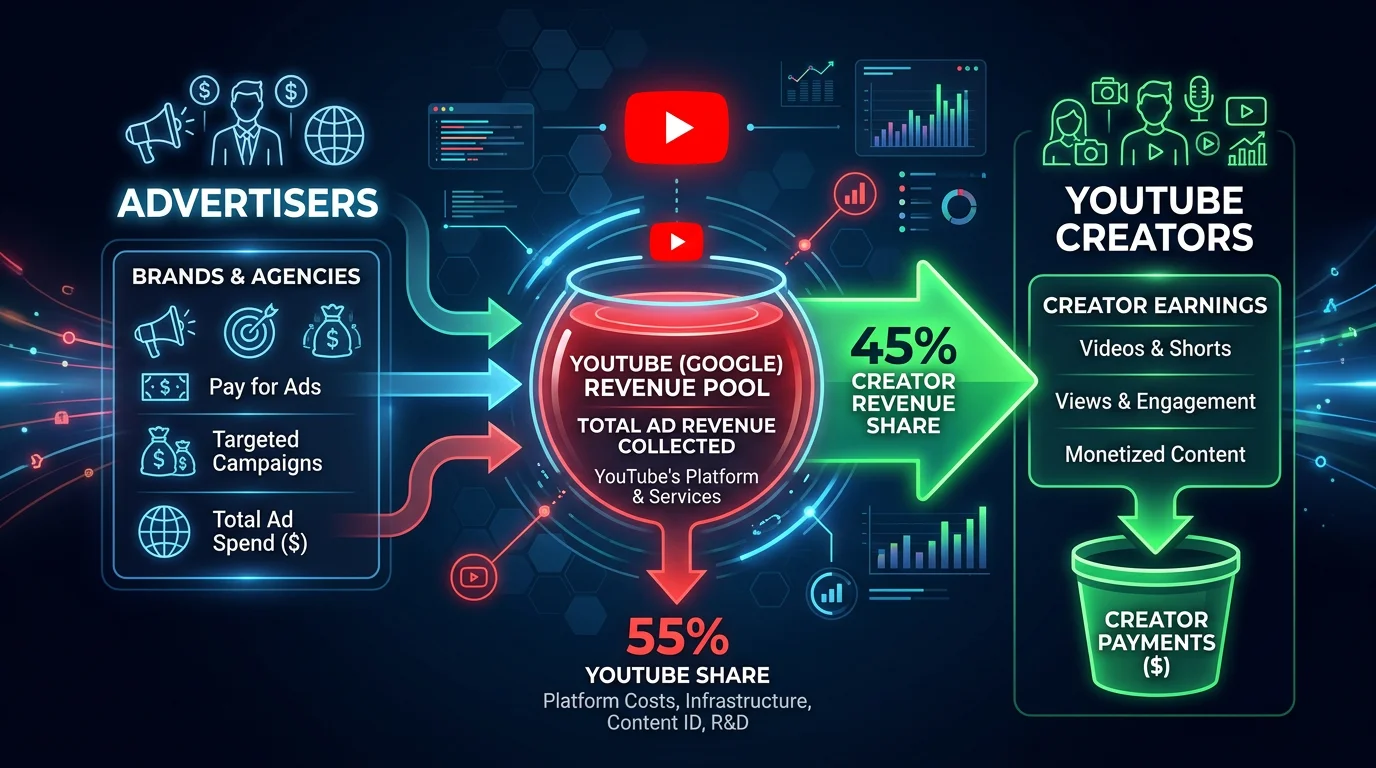
Once you’re in, you start earning a cut of the ad revenue that runs between Shorts in the feed. The more views your Shorts rack up, the bigger your piece of that shared revenue pool becomes.
It's important to set the right expectations here. For most channels, the direct income from Shorts ads isn't going to be a game-changer at first. The real financial power of Shorts is using them as a massive top-of-funnel magnet to pull in new subscribers who then watch your longer, higher-earning videos.
"When Is the Best Time to Post a Short?"
I wish there was a magic answer, but the truth is, the "best time" is completely unique to your audience. Forget about generic advice—your own analytics hold the key.
Dive into your YouTube Studio and head over to the "Audience" tab. Look for the chart called "When your viewers are on YouTube." This is your goldmine. It shows you the exact days and hours your community is most active. I’ve found the best strategy is to post about an hour or two before those peak activity times hit. This gives the algorithm enough time to index your video and start pushing it out just as your audience is starting to scroll.
If your channel is brand new and you don't have this data yet, no worries. Start by experimenting with generally popular times, like weekday afternoons (12 PM - 4 PM) or weekend mornings, and watch your analytics closely to see what sticks.
"Should I Make a Separate Channel Just for Shorts?"
For probably 99% of creators, the answer is a firm no. Keep your Shorts on your main channel. Think of them as commercials for your brand—they're a powerful discovery tool that introduces a constant stream of new people to your primary content.
The only real exception is if your Shorts are completely disconnected from your main channel's niche. For instance, if you run a serious channel on stock market analysis but want to post comedy skits, that would be confusing for your audience. In a rare case like that, a second channel makes sense. Otherwise, keeping everything under one roof is the fastest way to build a cohesive brand and grow.
Ready to put your channel on autopilot and achieve consistent growth without the daily grind? FlowShorts uses AI to create and auto-post high-quality, faceless content for you every single day across YouTube Shorts, TikTok, and Reels. Stop worrying about what to post next and start building a content machine that works for you. Check out FlowShorts and start your free trial today.