Best Time to Post YouTube Shorts (2026)
The best time to post YouTube Shorts is weekdays between 3 PM and 6 PM EST, with Tuesday and Wednesday delivering the highest engagement. This guide covers day-by-day timing, data from Buffer, Sprout Social, and Adobe, plus the late-night strategy that outperforms.
FlowShorts Team
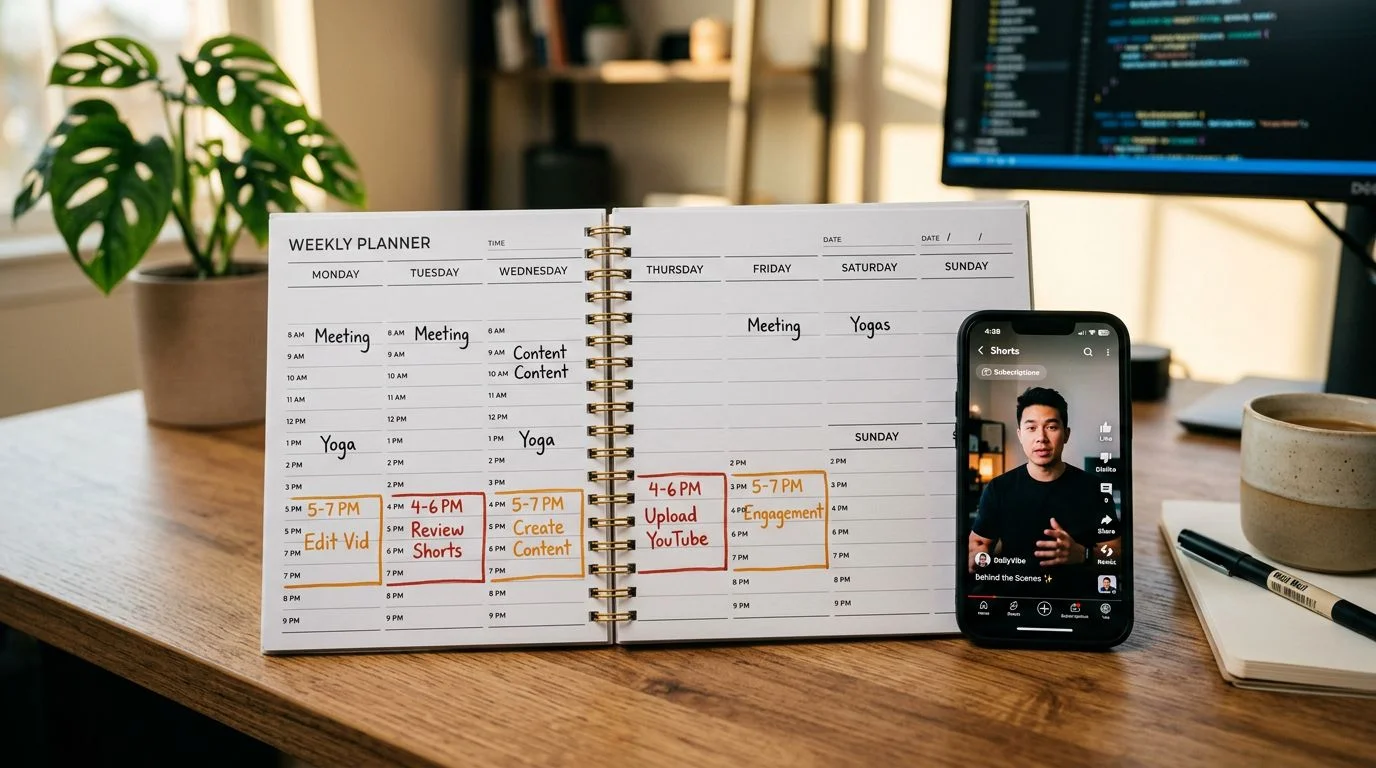
The best time to post YouTube Shorts is weekdays between 3 PM and 6 PM EST, with Tuesday and Wednesday consistently delivering the highest engagement. But these are averages pulled from millions of channels. Your optimal posting time depends on your niche, your audience's time zone, and when your specific subscribers are active.
This guide breaks down the best posting times by day, what large-scale studies from Buffer, Sprout Social, and Adobe actually found, why late-night posting outperforms for certain niches, and how to find your own best time to post on YouTube Shorts using YouTube Studio Analytics.
Best Times to Post YouTube Shorts by Day (2026)
This table combines data from four major analytics studies to give you the best time to post shorts on YouTube for each day of the week. All times are in EST.
| Day | Best Time to Post (EST) | Why |
|---|---|---|
| Monday | 12 PM and 3 PM - 5 PM | Lunch break scrolling plus the afternoon energy dip when viewers reach for their phones |
| Tuesday | 2 PM - 6 PM | Highest average likes of any day according to Adobe's study; viewers are settled into the week |
| Wednesday | 3 PM - 5 PM and 7 PM | Mid-week peak; Buffer identified Wednesday at 4 PM as the single best slot |
| Thursday | 1 PM - 4 PM | Strong engagement as viewers anticipate the weekend; consistent across all studies |
| Friday | 12 PM - 3 PM | Morning and early afternoon perform well; engagement drops after 4 PM as people start weekend plans |
| Saturday | 9 AM - 11 AM | Weekend mornings are prime for relaxed scrolling; avoid late afternoon when people are out |
| Sunday | 9 AM - 11 AM and 7 PM - 9 PM | Morning catch-up browsing plus an evening window as people wind down before the workweek |
If you can only post a few times per week, prioritize Tuesday through Thursday between 3 PM and 5 PM EST. This window delivers the most consistent results across every study we reviewed. For guidance on how many Shorts to publish daily, see our YouTube Shorts posting frequency guide.
What the Data Sources Show
Four major analytics platforms have published large-scale studies on YouTube posting times. Here's what each found:
- Buffer analyzed millions of YouTube posts in 2025-2026 and found Wednesday at 4 PM as the top slot for Shorts, with Thursday at 4 PM and Monday at 4 PM close behind. The 4 PM hour dominated across all weekdays.
- Sprout Social identified Tuesday through Thursday between noon and 5 PM as the prime window. Their data showed Mondays peaking at noon and again from 3-8 PM.
- Adobe found that Tuesday had the highest average likes on YouTube Shorts. While Thursday was the most popular upload day, Tuesday delivered better per-video engagement, suggesting less competition for more attention.
- Shortimize confirmed 3 PM to 5 PM as a consistently strong window across most days and called mid-week "king" for Shorts performance.
The pattern across all four: Tuesday through Thursday, mid-afternoon to early evening, is the most reliable window for broad reach. The convergence of multiple independent datasets on the same time slots gives this finding high confidence.
The Afternoon and Evening Window
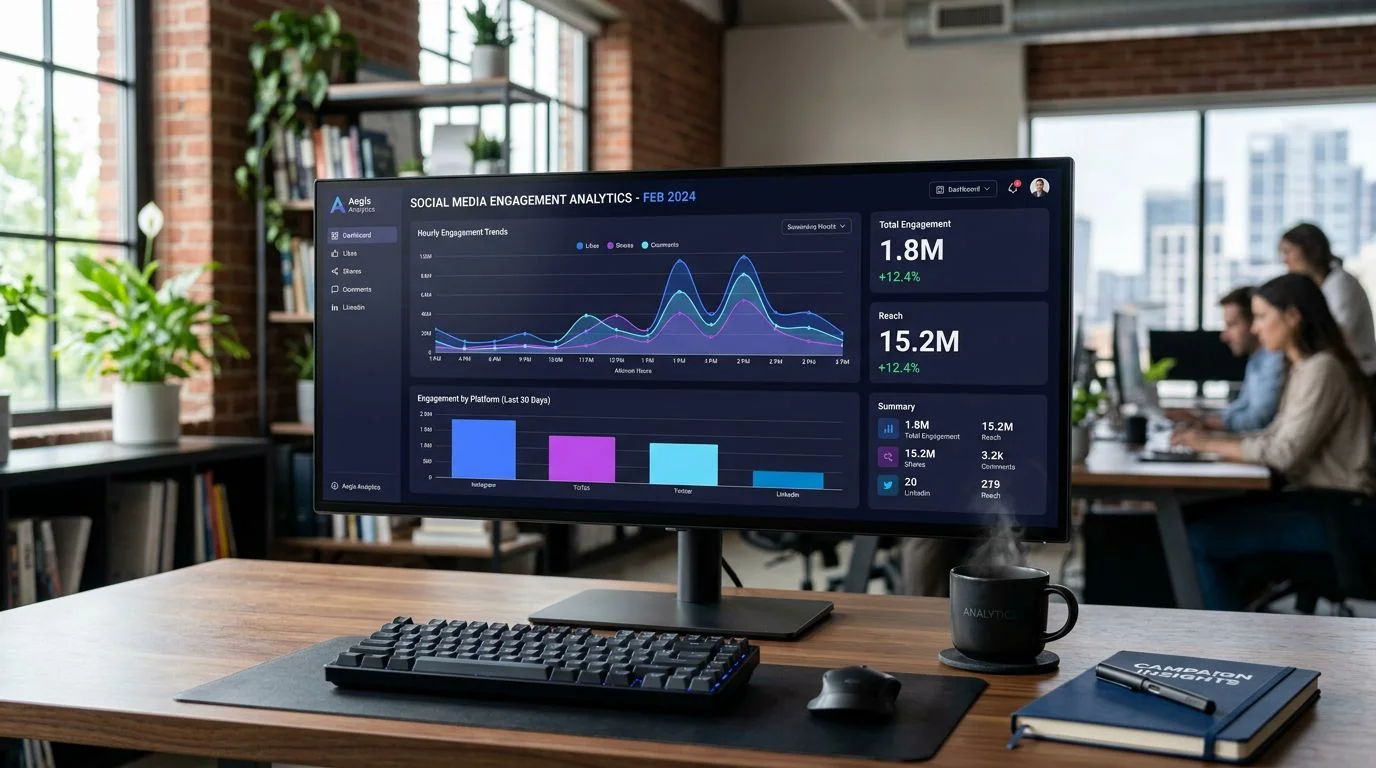
The 3 PM to 7 PM EST window works for a specific reason: it catches viewers during the afternoon energy dip (3-5 PM) when people reach for their phones during work or school breaks, and continues into the post-work scroll (5-7 PM) when commuters and home viewers settle in for entertainment.
According to Shortimize, the 4 PM to 7 PM range is often called the "golden hour" for YouTube Shorts views. This tracks with behavior data: viewers are done with productive work but haven't committed to evening plans yet. Short-form content fits perfectly into these gap moments.
If you post 1-2 hours before your audience's peak activity time, the YouTube Shorts algorithm has time to test your video with a small group and begin pushing it to a wider audience as viewership peaks. Posting right at peak time means your video competes immediately without an early engagement signal.
The Late-Night Strategy
Posting after midnight sounds counterintuitive, but the data supports it for certain creators and niches.
A 2025 Metricool study found that YouTube Shorts posted at 1 AM generated the highest average views, hitting 3,184 views per Short. This is significantly above the average for most other time slots.
The logic: fewer creators posting means less competition in the Shorts feed. A Short published at 1 AM has several quiet hours to accumulate initial engagement from late-night viewers and international audiences. By the time your local followers start their morning scroll around 6-7 AM, the Short already has traction that signals quality to the algorithm.
Who Watches YouTube Shorts Late at Night?
Let AI Handle Your Posting Schedule
FlowShorts auto-posts videos at the optimal time to YouTube Shorts, TikTok & Instagram Reels.
Set Up Auto-Posting →- International audiences: Your midnight is someone else's afternoon. If you have viewers in Europe, Asia, or Australia, late-night posting in EST serves their prime time directly.
- Night owls and insomniacs: Actively scrolling when the Shorts feed has less fresh content competing for attention.
- Shift workers: Healthcare, logistics, and service workers whose "evening" starts when the traditional audience is asleep.
- Students: Late-night study breaks often turn into YouTube Shorts sessions, particularly for educational and entertainment content.
Niches Where Late-Night Posting Works Best
- Motivation and self-help: Resonates during quiet, reflective moments late at night or early morning.
- History and science: Timeless content with a global audience not dependent on local time zones.
- Finance and investing: Evergreen topics that perform well regardless of posting time, but benefit from reduced competition overnight.
- Horror and mystery: The late-night atmosphere amplifies the mood of the content.
Timing by Niche
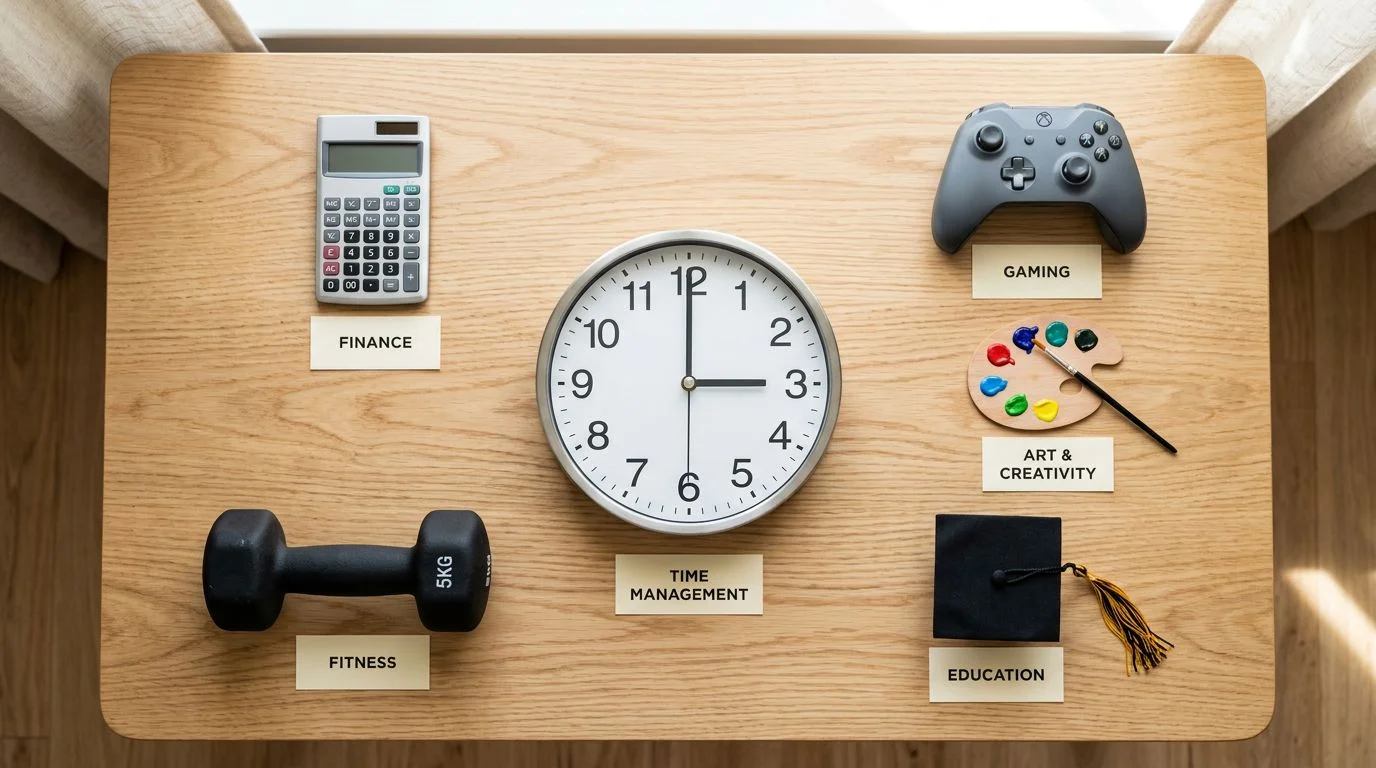
Generic "best times" charts are a starting point, not a strategy. Real results come from matching your schedule to your specific audience's habits. Here's the best time of day to post YouTube Shorts based on content category:
| Niche | Best Days | Best Times (EST) | Why |
|---|---|---|---|
| Finance / Investing | Mon-Fri | 6 AM - 9 AM | Audience checks financial content before the market opens and the workday starts |
| Tech / B2B | Tue-Thu | 12 PM - 2 PM | Professionals scrolling during lunch breaks; mid-week focus is highest |
| Gaming | Fri-Sun | 4 PM - 9 PM | After-school and after-work gaming sessions; weekends are peak play time |
| Education / Science | Tue-Thu | 12 PM - 4 PM and 8 PM - 10 PM | Midday brain breaks plus evening learning sessions |
| Motivation / Self-Help | Daily | 5 AM - 8 AM and 9 PM - 12 AM | Morning tone-setting for the day and nighttime reflection |
| Entertainment / Comedy | Wed-Sat | 4 PM - 8 PM | Post-work relaxation when viewers want light, entertaining content |
| DIY / Crafts | Sat-Sun | 9 AM - 1 PM | Weekend project planning and inspiration seeking |
How the YouTube Shorts Algorithm Handles Timing
Understanding how the YouTube Shorts algorithm distributes content helps explain why posting time matters, and also why it's not the only factor.
Unlike traditional YouTube videos where upload time directly affects the first-hour push, YouTube Shorts use a different distribution model. Here's how it works:
- Initial test batch: When you publish a Short, the algorithm shows it to a small group of viewers, often from your subscriber base and viewers of similar content.
- Engagement signal: If that initial group watches most of the Short, likes it, or shares it, the algorithm pushes it to a larger audience.
- Iterative expansion: Strong performance leads to progressively larger audience groups. Weak signals cause distribution to slow or stop.
- Extended shelf life: Unlike TikTok where virality peaks within hours, Shorts can gain traction days or even weeks after posting. The algorithm re-tests content periodically.
Posting time matters most for Step 1: you want your initial test group to be your most engaged audience. If your core viewers are active at 4 PM EST and you post at 4 AM EST, that first batch of viewers might not represent your best audience. The algorithm could get a weak initial signal and throttle distribution before your real audience ever sees the Short.
That said, YouTube has publicly stated that the Shorts algorithm prioritizes content quality, watch time, and viewer satisfaction over upload timing. A great Short posted at a mediocre time will outperform a mediocre Short posted at the "best" time. Timing is an optimization, not a substitute for content quality. For more on what drives Shorts performance, see our guide on how to make videos go viral.
How to Find Your Own Best Posting Time
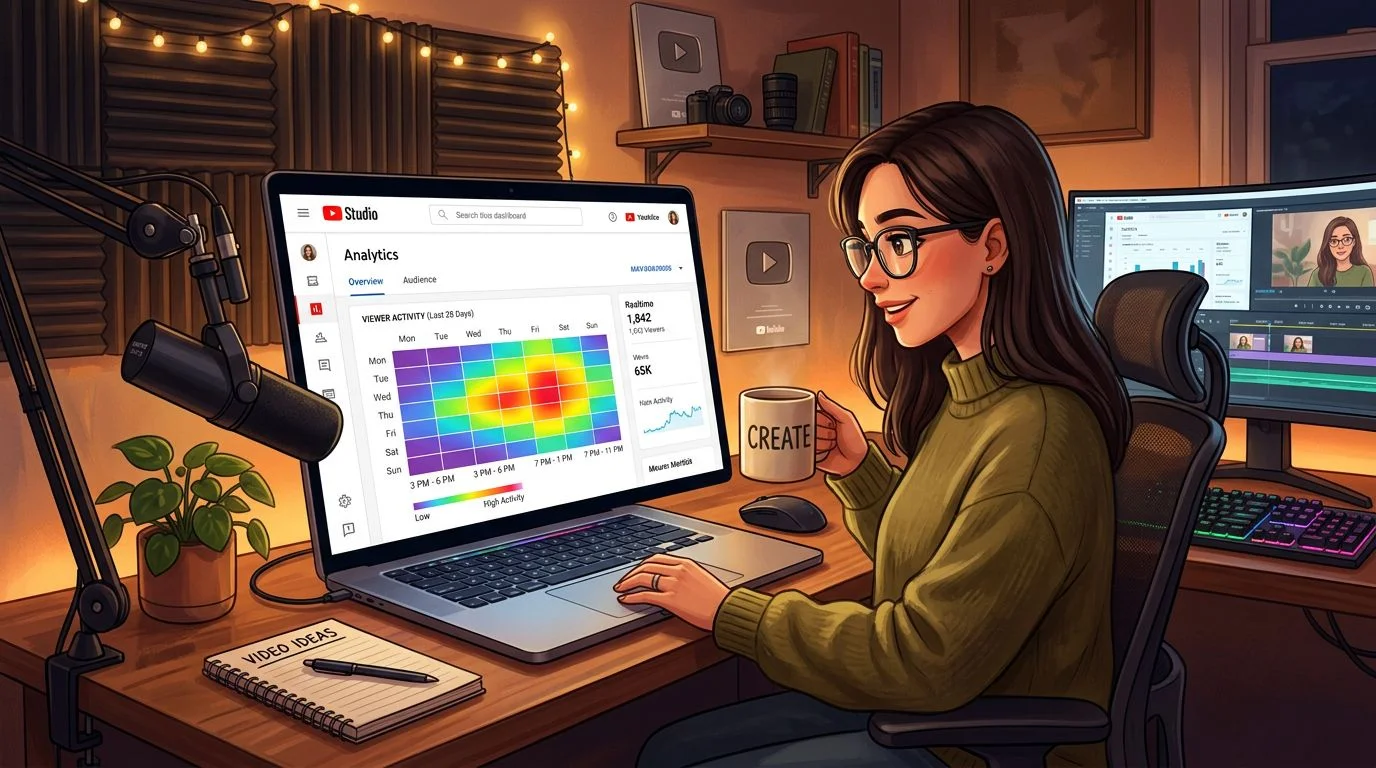
Your YouTube Studio Analytics data is more valuable than any generic study. Here's how to use it:
Step 1: Check Your Audience Activity
You need at least 28 days of data and a baseline of subscribers for this to work. Then:
- Open YouTube Studio (studio.youtube.com).
- Click Analytics in the left sidebar.
- Go to the Audience tab.
- Scroll to the "When your viewers are on YouTube" chart.
This heatmap shows the exact days and hours your subscribers are most active. Dark purple bars indicate peak activity. If you see strong activity on Wednesdays at 6 PM but you've been posting on Friday mornings, you've found an immediate opportunity.
Step 2: Run a Two-Week Test
Let AI Handle Your Posting Schedule
FlowShorts auto-posts videos at the optimal time to YouTube Shorts, TikTok & Instagram Reels.
Set Up Auto-Posting →Your analytics data gives you a hypothesis. Now test it:
- Create 6-8 Shorts that are similar in topic, length, and production quality.
- Pick 2-3 time slots based on your Analytics data (e.g., Tuesday 3 PM, Thursday 5 PM, Saturday 10 AM).
- Post one Short per slot over 2 weeks, rotating through your test times.
- Track first-48-hour performance: Record views, watch-through rate, and engagement for each Short.
After 2-4 weeks, the data will show which slots consistently deliver better numbers. Lock those into your content calendar and re-test every 3-4 months as your audience evolves.
How to Automate Your Posting Schedule
Posting manually at 4 PM every Tuesday and Thursday is fine when you're starting out. But as your channel grows, scheduling becomes essential. YouTube Studio's built-in scheduler lets you set a publish date and time when uploading a Short.
For creators publishing across multiple platforms (YouTube Shorts, TikTok, and Instagram Reels), tools like FlowShorts can generate and auto-publish Shorts on a schedule across all three platforms simultaneously, so your content hits each platform at its optimal time without manual uploads. For a deeper walkthrough, see our guide on how to schedule YouTube Shorts.
Free YouTube Tools
Common Questions
When Is the Best Time to Post on YouTube Shorts?
The best time to post on YouTube Shorts is weekdays between 3 PM and 6 PM EST, with Tuesday through Thursday being the strongest days. Buffer found Wednesday at 4 PM as the single best slot, while Adobe's data shows Tuesday generates the most likes. Check your YouTube Studio Analytics for your audience's specific peak hours.
Does Posting Time Actually Matter for YouTube Shorts?
Yes, but less than content quality. Posting time affects how quickly the algorithm finds an engaged initial audience to test your Short with. A well-timed post can get a stronger initial signal, leading to wider distribution. However, a great Short posted at a suboptimal time will still outperform a weak Short posted at the "perfect" time.
What Is the Best Time to Post YouTube Shorts on Saturday and Sunday?
The best time to post YouTube Shorts on Saturday is 9 AM to 11 AM EST, when viewers are doing relaxed morning scrolling. On Sunday, there are two windows: 9 AM to 11 AM for morning browsing, and 7 PM to 9 PM as people wind down before the workweek. Weekend engagement is generally lower than mid-week, so prioritize Tuesday through Thursday if you're limited on content.
Should I Post YouTube Shorts at Night?
For certain niches, yes. Metricool's data shows Shorts posted at 1 AM average 3,184 views, the highest of any time slot in their study. Late-night posting works because there's less competition and your Short gains traction with international and late-night viewers before the morning rush. This strategy works best for motivation, history, science, and finance content.
How Often Should I Post YouTube Shorts?
1 to 3 Shorts per day is the sweet spot for most creators. Consistency matters more than volume: posting one quality Short every day outperforms posting seven rushed Shorts on Monday. If you're just starting out, aim for 3-5 Shorts per week at consistent times. For more detail, see our YouTube Shorts posting frequency guide.
Do YouTube Shorts Perform Differently Than Instagram Reels in Terms of Timing?
Yes. YouTube Shorts have a longer shelf life than Reels. A Short can gain traction days or weeks after posting because YouTube's algorithm re-tests content periodically. Instagram Reels tend to peak within the first 24-48 hours. This means posting time is slightly less critical for Shorts, but still matters for that crucial initial push. See our best time to post Reels guide for Instagram-specific timing data.
Related Guides
- How to Schedule YouTube Shorts in 2026
- How Many YouTube Shorts Should You Post Per Day?
- How to Get More Views on YouTube Shorts
- Best Hashtags for YouTube Shorts
- How to Monetize YouTube Shorts
- How to Make Videos Go Viral
- Best Time to Post Reels
Need content ideas? Browse YouTube Shorts Ideas by Niche — 30+ niches with hooks and concepts.